
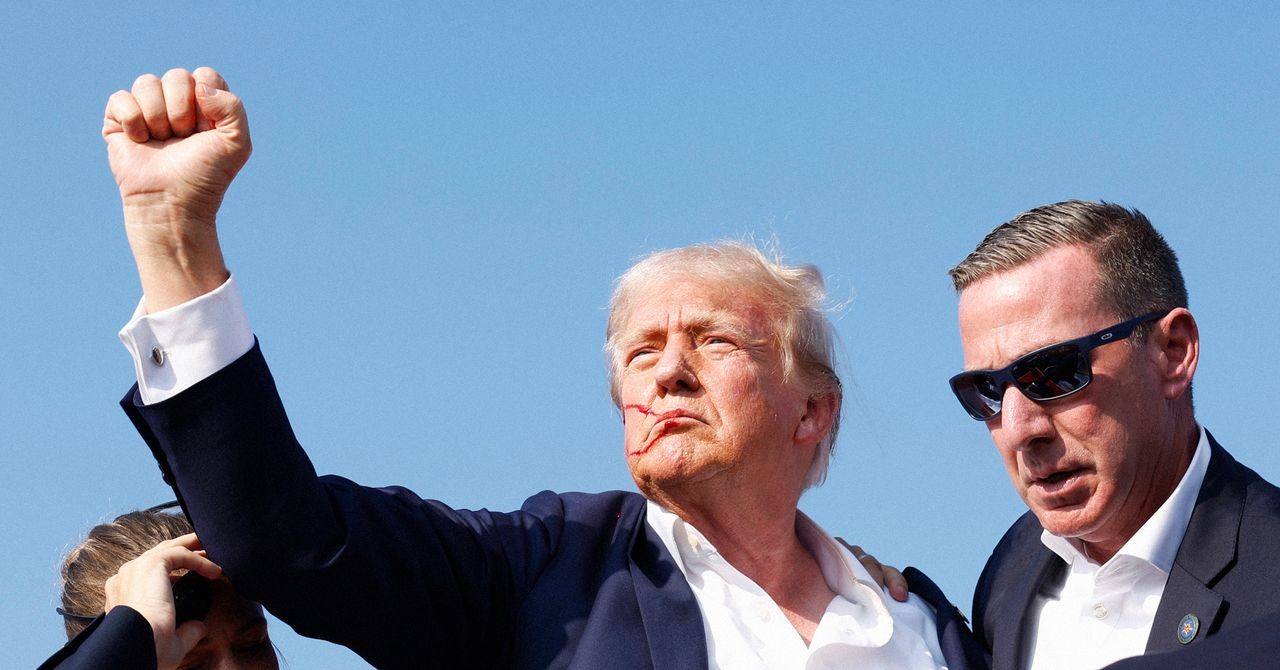
Despite a complete lack of evidence, a significant portion of the online populace—spanning both the far-right MAGA movement and left-wing commentators—has embraced the narrative that recent assassination attempts on President Donald Trump were staged. From the 2024 incident in Butler, Pennsylvania, to the April 2025 attack at the White House Correspondents’ Dinner (WHCD), social media algorithms have amplified baseless claims over factual reporting.
This phenomenon highlights a dangerous trend in modern political discourse: the erosion of shared reality. When facts are inconvenient or incomplete, conspiracy theories fill the void, driven not by evidence but by ideological bias and the economic incentives of outrage-driven content creation.
The Anatomy of a Conspiracy
The belief that these attacks were faked is not confined to one political side. It is a bipartisan conspiracy theory, fueled by different grievances but arriving at the same false conclusion.
- On the Left: Influencers and commentators argue that Trump is manufacturing victimhood to garner sympathy and justify aggressive foreign or domestic policies. Prominent figures, including novelist Joyce Carol Oates and digital creator Leigh McGowan, have suggested that the Butler and WHCD incidents follow a similar, pre-planned script.
- On the Right: Many Trump supporters, frustrated by his administration’s policies (such as the war in Iran) or rhetoric, have similarly questioned the authenticity of the Butler shooting. They often cite security failures or the shooter’s lack of clear motive as proof of a “deep state” plot.
Nina Jankowicz, CEO of the American Sunlight Project, notes that this convergence is less about truth and more about engagement. “In our outrage- and rumor-filled online economy,” she explains, “individuals are trying to capitalize on the moment to farm rage and get clicks.”
Deconstructing the Butler Claims
The 2024 Butler rally shooting remains the epicenter of these theories. Critics point to several “anomalies” as proof of staging, yet each claim collapses under scrutiny.
1. The “Perfect” Photographs
Conspiracy theorists cite a video showing a campaign staffer moving toward photographers after the first shots were fired, alleging that staff orchestrated the iconic image of Trump raising his fist.
The Reality: Footage captured by Washington Post photographer Jabin Botsford using Meta smart glasses disproves this. The video shows photographers acting independently, doing their jobs. Furthermore, claims that a flag was lowered to frame the shot are false; Botsford’s footage confirms the flag remained suspended at a constant height throughout the incident.
2. The Ear Injury
Skeptics argue that Trump’s ear showed minimal damage, suggesting he was never hit by a bullet. Some point to his appearance two weeks later, bandage-free, as evidence of a hoax.
The Reality: Medical records from Butler Memorial Hospital were never made public, leaving room for speculation. However, Trump’s former physician, Dr. Ronny Jackson, stated that Trump suffered a 2-centimeter-wide gunshot wound to the cartilaginous surface of the ear. While no sutures were required, the injury was real. The FBI confirmed Trump was hit by a bullet fragment, contradicting earlier speculation that it might have been shrapnel.
3. The Unknown Shooter
The lack of a clear motive for the shooter, Thomas Matthew Crooks, has led to claims that he was a “plant” or a disposable stooge.
The Reality: The FBI concluded in November 2025 that the shooter acted alone. Kash Patel, then-FBI Director, announced the investigation was inactive after exhausting all leads. While this lack of a “smoking gun” motive frustrated many, it is common in lone-wolf attacks. The failure to provide deeper context has allowed conspiracists to invent one.
The White House Correspondents’ Dinner Incident
The April 25, 2025, attack at the WHCD saw a similar wave of disinformation, despite the swift indictment of the alleged attacker on charges including attempted assassination.
1. Security Failures as Proof of Conspiracy
Critics claim that lax security allowed the attacker to bring weapons into the Hilton Hotel, implying insider coordination.
The Reality: National security expert Garrett Graff explains that the security perimeter was functioning as intended. The attacker was stopped at the perimeter, but that perimeter did not encompass the entire hotel where the dinner was held. This is a standard limitation of event security, not evidence of a plot.
2. The “Manifesto” Myth
Social media circulated claims that the attacker sent a manifesto to family days in advance, and that law enforcement ignored it.
The Reality: Authorities confirmed that any written screed was sent minutes before the incident. There is no evidence of prior notification or ignored warnings.
3. Misinterpreted Quotes
Two key moments were twisted to support the conspiracy narrative:
* Karoline Leavitt’s Comments: The White House Press Secretary told a reporter, “There will be some shots fired.” Conspiracy theorists claimed this was a leak of the attack plan. In context, she was referring to the comedic jokes Trump planned to deliver.
* Aishah Hasnie’s Interrupted Broadcast: Fox News correspondent Aishah Hasnie was cut off while saying her husband told her to “be very safe.” Critics claimed this was a warning about the attack. Hasnie later clarified that her husband was expressing general concern for her safety due to bad cell service and the volatile political climate, not a specific threat.
Why Do These Theories Persist?
The persistence of these myths is less about evidence and more about psychology and politics. Joseph Uscinski, a political science professor at the University of Miami, notes that individuals with conspiratorial worldviews see patterns where none exist.
“Even if the FBI were to release a trove of documents related to the case and the shooter, the conspiracies would continue.”
The gap between official narratives and public trust is widening. When institutions fail to provide satisfying answers—or when they are perceived as biased—people turn to alternative explanations that align with their existing beliefs.
Conclusion
The claims that the assassination attempts on Donald Trump were staged are entirely devoid of factual basis. Each piece of “evidence” cited by conspiracy theorists—from photographer movements to ear injuries—has been debunked by direct video footage, medical testimony, or official investigations.
Ultimately, these theories serve as a mirror for deep political polarization. They reveal a media landscape where engagement is valued over accuracy, and where trust in institutions has fractured to the point that even violent, life-threatening events are viewed through the lens of cynicism and manipulation.