

Look at the car rolling off the assembly line. It’s not just metal and glass. It is the end result of a complex change process. This is the heart of any production system.
In industry, everything depends on one thing: turning resources into something useful. Whether it’s a car, a software update, or a haircut, the goal is the same. They accept the input. They try hard. You will receive a printout.
Production ingredients
Economists have a name for these inputs. They call them factors of production. There are three main ones:
- Labor: The people doing the work.
- Capital: Money, machinery and equipment used to make things.
- Land: Physical space, buildings and raw materials.
Production managers may use different terms. They often refer to the “five M’s”: people, machines, methods, materials and money. It’s the same concept. Just a different name with the same puzzle pieces.
Without these you can’t do anything. But just owning them is not enough. You need a system to move them.
Currents and restrictions
The production system is not static. It’s a flow.
Think about the physical movement of goods. The raw materials come in. They become works in progress. Finally, the finished products leave the factory. This physical flow has its limits. The capacity and floor space of your machine will determine how much you can actually produce. If you try to apply more pressure than the system can handle, it will break.
Then there is the flow of information. This is paperwork. Information. Plans. Instructions.
If the physical flow is the body of the activity, the information flow is the nervous system. It tells the machines what to do and when. Managing this flow is a big part of the production manager’s job. Bad communication here means wasted material. That means delays. That means lost money.
Quality is not optional
Capacity tells you how much you can make. The quality tells whether it is worth selling.
Quality is not just one thing. It’s a bunch of features.
- Does it look right?
- Does it work as promised?
- Will it last?
- Is it easy to fix?
Up-to-dateness is also important. Getting the product to the customer two weeks late is a quality defect. Costs are important. Documentation is important. If the manual is missing or incorrect, the product is defective in the eyes of the user.
Quality is the limiting factor. You can’t bypass it to increase speed. If you compromise on quality, you will lose your reputation. And reputations are hard to rebuild.
Three ways to produce
Not all production looks the same. There are three basic types of systems. Everyone has their own logic. Each serves the needs of different markets.
1. Batch system
Here you do things in groups.
In a batch production system you use universal equipment. You do not have your own line for a specific product. Instead, you move a stack of items through the same steps. The next batch may be different. Various specifications. Different materials. Different requirements.
Think of a specialty chemical plant. Or a contract manufacturer that manufactures customer-specific machine tools. You make a batch of 100 units. Then change the tool. Then make a batch of 50 different units.
This flexibility is the main advantage. It enables versatility. Disadvantage? It can be slow. Changing settings takes time. It is inefficient in mass production. But it is perfect for small volume, wide variety of goods.
Insurance companies also use this logic. You process the applications in batches. Similar claims will one day pass through the system together. Then the next batch. It is not continuous. It is grouped.
This is only the first piece of the puzzle. Understanding batch production is key for small manufacturers and service providers. But that’s not the only way. Continuous systems and project systems offer different trade-offs. And they come next.
Assembly line mechanics
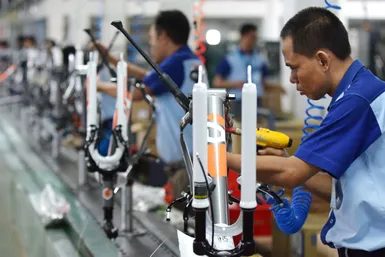
The assembly line is a beast of efficiency. It moves items through a series of steps. These steps are standard. They apply to most products in the line. This does not apply to custom-made crafts. It’s all about volume. The goal is a large throughput. To get there, companies invest in special equipment. These tools are designed to do one thing: reduce production costs. They lower the unit price.
Workers don’t build everything. It would take too long. Instead, the work is divided into small parts. Each task is simple. It can be mastered quickly. This enables quick execution. The worker becomes a cog in a high-speed machine. Think cars rolling off the assembly line. Or televisions stacked in warehouses. washing machines. Personal computers. All born from this continuous system.
“Continuous production systems are often also called assembly systems or assembly line systems.”
This model dominates mass production. It’s common. It is predictable. The system controls the flow. The worker completes the task. The result is a more cost-effective product. But at what efficiency cost? The machine keeps moving. The worker keeps repeating. Is this a compromise we accept for cheap products? The line does not stop.
One shot reality
You can see how the first two systems – flow and batch – are constantly mixed together. Think about how your phone’s brain is made. Thousands of tiny integrated circuits move through giant silicon wafers. They are processed in a series of dozens of steps. Then the microscopic chips, which are only a few millimeters wide, are removed. Each is soldered and assembled together with other components on a continuous line. It is a dance of mass production and individual precision.
But then there is the third beast.
A project-based manufacturing system (often called a one-shot system) is not about efficiency in the traditional sense. It cares about completion.
This isn’t about creating the next thousand widgets. This is about building a single, unique entity. A skyscraper. A cruise ship. A prototype for a new fighter or giant supercomputer.
Resources are not constantly replenished on the assembly line. They are gathered. Once. For this specific task.
Because the stakes are so high and the variables so infinite, you can’t use standard assembly line management. You need a special framework to keep costs from spiraling into oblivion. The singular nature of the product demands a singular approach to control.
“To keep production costs at a suitable level, special management methods have been developed.”
Why? Because if you build something that will never be rebuilt, there is no second chance to fix the supply chain. There is no “next batch” to amortize the mistakes of the first. Every decision is final. Every resource allocation is a bet.
And in this isolation, the pressure to manage risk isn’t just a best practice. It’s about survival.
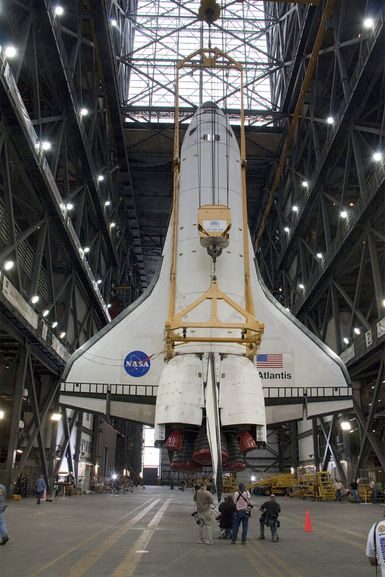
It’s hard to gauge the size of the Vehicle Assembly Building (VAB) at Florida’s Kennedy Space Center until you step inside. It’s more than just a warehouse. It is a cathedral of aerospace engineering with about 3.7 million cubic meters of air. It is about 130 million cubic feet of empty space designed to swallow a gigantic Apollo-Saturn V rocket.
But the building’s legacy extends beyond the 1960s. It currently houses the Space Shuttle Atlantis, suspended in the air like a mechanical whale. Before external fuel tanks and solid-fuel rocket boosters can be installed within this cavernous environment, it must undergo final checks in this cavernous environment.
How VAB supports space exploration
VAB was built with one goal in mind: vertical integration. You don’t build a rocket on the ground and roll it out. you build it floor by floor. This method protects the vehicle from the weather and allows for precise alignment of large components.
Today, VAB is still one of the largest buildings in the world. Its height and width are not arbitrary. They depend on the size of the rocket they have to fit into. In the Apollo program it was the Saturn V. In the space shuttle era it was a combination of orbiter, fuel tank and booster.
The Logistics of Launch Preparation
Preparing Atlantis for flight requires more than just stacking parts. It requires a complex dance of cranes, platforms and teams of experts. The shuttle is suspended on a mobile launcher platform, and the entire assembly is eventually transported to the launch pad.
The VAB interior is designed to withstand this weight and complexity. It houses the necessary infrastructure for testing and assembly. Without it, launching a vehicle of this size would be much more difficult.
Why vertical integration is important
Assembling the rocket vertically has several advantages. This allows easy access to different parts of the vehicle. It also reduces the risk of damage during transport. The rockets, which are assembled horizontally and rolled onto a crawler-transporter, are sensitive to vibration and environmental factors. VAB’s environment is controlled.
This method has been used for decades. This works because it centralizes the assembly process. All the teams involved in building the rocket are in one place. Communication is direct. Errors are caught early.
The future of VAB
VAB is more than just a museum piece. This is a working facility. Although the Space Shuttle program has ended, the building is being adapted for new missions. The Artemis mission, which aims to return humans to the moon, may also use VAB for assembly. For example, the Artemis 1 mission included the Space Launch System (SLS), a much larger rocket than the Saturn V.
The versatility of the building is its biggest asset. Compatible with different types of vehicles. Compatible with different assembly methods. It is a tool that can flexibly react to a constantly changing environment.
The Human Element
There are thousands of workers behind the steel and concrete. Engineers, technicians and workers spend their days inside VAB. They are the ones who ensure that every bolt are tightened, all wires are connected and all systems are tested. their work is often unseen by the