
Insect repellent has a reputation problem. For many, the memory of being doused in chemical sprays as children evokes discomfort rather than relief. Yet, the stakes of skipping protection are high. Repellents are not merely cosmetic conveniences; they are critical barriers against serious pathogens like West Nile virus and Lyme disease.
According to Sonja Swiger, a professor of entomology at Texas A&M University, repellents work by disrupting an insect’s sensory perception, effectively making humans “invisible” to biting bugs. While environmental management programs help reduce bug populations, they cannot offer complete protection. For anyone spending extended time outdoors—particularly in areas with high insect activity—personal application of repellent remains the most reliable defense.
The market in 2026 has evolved significantly from the harsh, pungent formulas of the past. Today’s options offer a variety of active ingredients, textures, and scents, allowing users to balance efficacy with comfort. Below is a breakdown of the top-performing products across the four major categories of active ingredients, based on rigorous field testing.
Understanding the Active Ingredients
Before diving into specific product recommendations, it is essential to understand what you are applying. The efficacy of a repellent is determined by its active ingredient, not just its brand.
- Picaridin: A synthetic alternative to DEET that is odorless and non-greasy. It is often preferred for its cosmetic elegance and lack of damage to plastics or fabrics.
- DEET (N,N-Diethyl-meta-toluamide): The gold standard for decades. Highly effective against a wide range of insects, though it can have a strong chemical odor and may degrade certain synthetic materials.
- IR3535: An ethyl-butoxyethyl-aminopropionphenol derivative that mimics amino acids found in human sweat. It is lightweight, odorless, and gentle on skin.
- Oil of Lemon Eucalyptus (OLE) / P-MD: A plant-based option containing p-menthane-3,8-diol. It is effective for short-to-medium duration outings but generally requires more frequent reapplication than synthetic options.
Top Picks: Picaridin Repellents
Best for: Users seeking a balance of long-lasting protection and a pleasant user experience.
Best Dry Feel
Avon Skin So Soft Bug Guard Plus EX
This spray delivers a fine, even mist that avoids pooling on the skin. While it retains a mild chemical scent reminiscent of rubbing alcohol, it is significantly less pungent than DEET alternatives. The formula feels lightweight and slightly sticky upon application but dries to a manageable finish.
* Active Ingredient: 20% Picaridin
* Protection Duration: Up to 12 hours
* Key Feature: Locking lid prevents accidental sprays in bags.
Best Overall Spray
Sawyer Picaridin 20% Insect Repellent
Offering thorough coverage, this spray requires a brief rub-in to fully absorb. Despite the slight tackiness, its “Scent Zero” formulation successfully masks the typical repellent odor. Sawyer also offers scented variations (Night Sky, Ranger Orange) for those who prefer fragrance.
* Active Ingredient: 20% Picaridin
* Protection Duration: Up to 12 hours
Best Lotion
Repel Picaridin Lotion
Lotion-based repellents often provide a more comfortable application experience than sprays. This specific formula stands out for its mild scent and hydrating properties, leaving skin feeling moisturized rather than oily. It absorbs quickly, avoiding the “sitting on top” sensation common with other lotions.
* Active Ingredient: 20% Picaridin
* Protection Duration: Up to 14 hours
Best Wipes
Avon Skin So Soft Bug Guard Plus EX Wipes
These large (9 x 5.5 inches) wipes are highly efficient, requiring only one or two to cover exposed skin. They feature a powdery, pleasant scent rather than a chemical one. The formula includes Vitamin E and aloe, functioning almost as a skincare product.
* Active Ingredient: 10% Picaridin
* Key Feature: Contains moisturizing agents; ideal for sensitive skin.
Best Smelling
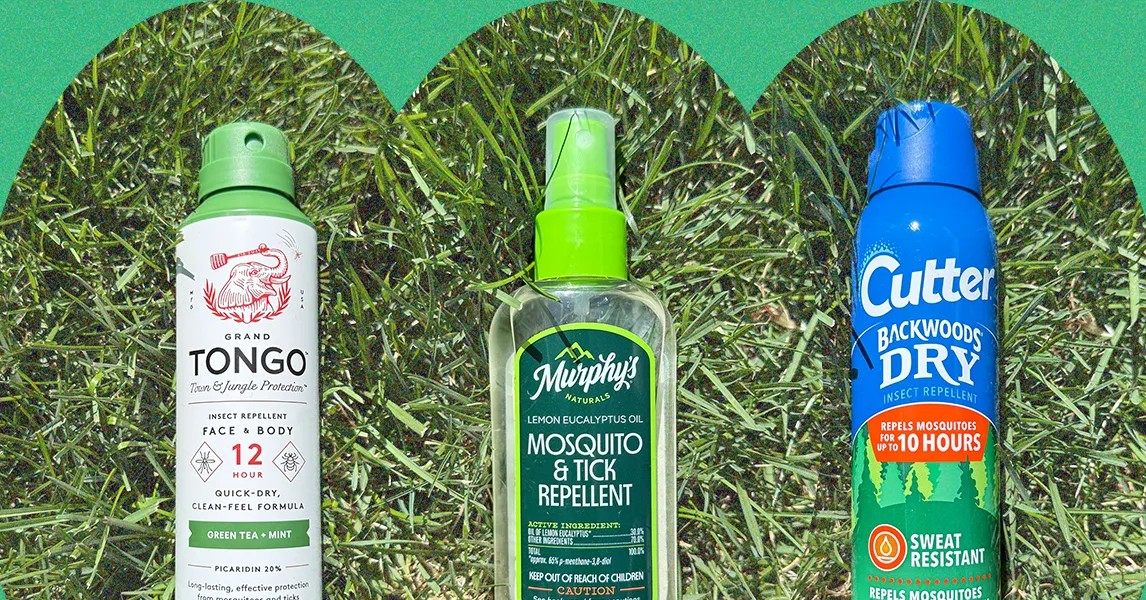
Grand Tongo Picaridin Spray
Among nearly 20 tested products, this spray emerged as the standout for fragrance. It offers a subtle, sweet, and fresh scent (Green Tea and Mint) without any harsh chemical undertones. The bottle design is aesthetically pleasing, featuring a locking lid and a wide, even spray pattern.
* Active Ingredient: 20% Picaridin
* Protection Duration: Up to 12 hours
* Note: Also available in Citrus/Sandalwood and fragrance-free.
Best for Travel
Grand Tongo Pocket Spray
Designed for portability, this TSA-friendly bottle fits easily into pockets or small hiking packs. The lightweight formula dries quickly without leaving a greasy residue. The Orange Citrus and Sandalwood scent is particularly effective at masking chemical odors.
* Active Ingredient: 20% Picaridin
* Key Feature: Compact, travel-safe design.
Top Picks: DEET Repellents
Best for: High-risk environments and long-duration exposure where maximum efficacy is required.
Best Dry Feel
Cutter Advanced Life Science DEET Spray
While it retains the distinct chemical scent associated with DEET, this product offers a superior feel compared to many competitors. It dries down to a soft, slightly greasy finish that is not overwhelming.
* Active Ingredient: DEET (Concentration varies by region, typically 25-30%)
* Key Feature: Improved cosmetic feel for a traditional ingredient.
Best Overall Spray
Sawyer DEET 25% Insect Repellent
This spray provides a fine mist and dries to a minimally oily finish. The locking lid is robust, surviving rough handling in backpacks. It is sweat-resistant and holds up well during active use, requiring minimal reapplication.
* Active Ingredient: 25% DEET
* Protection Duration: Up to 10 hours
Best Lotion
Repel DEET Lotion
This lotion utilizes encapsulated DEET technology, where the active ingredient is bound in a slow-dissolving protein. This allows for a more gradual release of DEET, extending protection time while reducing the immediate greasiness often associated with DEET sprays.
* Active Ingredient: 20% DEET
* Protection Duration: Up to 11 hours
Best Wipes
Cutter DEET Wipes
Pocket-sized and potent, these wipes are slightly wet but highly effective for coverage. The scent is less intense than other wipe options, resembling rubbing alcohol. They are ideal for quick applications during travel or hikes.
* Active Ingredient: 30% DEET
* Protection Duration: Up to 7 hours
Best for Working Out
Off! Active Sweat Resistant Insect Repellent
Insects are attracted to sweat, making exercise in buggy areas challenging. This DEET-based spray is specifically formulated to withstand high-sweat activities like running and hiking. It features a unique nozzle that allows for upside-down spraying, facilitating easy application on the back. The scent is surprisingly light for a DEET product.
* Active Ingredient: DEET
* Key Feature: Sweat-resistant formula; upside-down spray capability.
Top Picks: IR3535 & Natural Alternatives
Best for: Users seeking lightweight, odorless, or plant-based options for shorter durations.
Best IR3535
Sawyer IR3535 Insect Repellent
This was the top-rated product for comfort. Unlike DEET or Picaridin, IR3535 feels truly dry to the touch within minutes and is nearly odorless. While the spray pattern is not as fine as some competitors, its lightweight, “barely-there” feel makes it ideal for sensitive users.
* Active Ingredient: IR3535
* Key Feature: Odorless and non-greasy.
Best Oil of Lemon Eucalyptus (OLE) Spray
Sawyer Lemon Eucalyptus Insect Repellent
This product combines p-menthane-3,8-diol (PMD) and oil of lemon eucalyptus. It is notably oily and requires thorough rubbing to absorb. The eucalyptus scent is strong initially but fades over time.
* Active Ingredient: 30% OLE / PMD blend
* Protection Duration: Up to 6 hours
Best Smelling OLE
Repel Plant-Based Lemon Eucalyptus Spray
A more pleasant alternative in the natural category, this spray has a fresher, citrusy scent that is less overpowering than pure eucalyptus. It dries to a slightly greasy finish but offers good coverage for short outings.
* Active Ingredient: 30% OLE / 65% PMD
* Protection Duration: 6 hours (Mosquitoes), 4 hours (Ticks)
Methodology and Context
Testing was conducted across 27 products in Denver, Colorado, during hikes, runs, and evening outdoor activities. While all products demonstrated efficacy in preventing bites, the dry climate of Denver limits the intensity of mosquito exposure compared to humid regions.
Why Context Matters:
Insect attraction is highly individualized. Mosquitoes and ticks locate hosts based on body heat, carbon dioxide emissions, and specific chemical signatures in sweat. Consequently, a repellent that works perfectly for one person may be less effective for another in the same environment. Furthermore, effectiveness can vary significantly based on local insect species and density.
Key Takeaways for Consumers:
1. Start Low: Begin with the lowest concentration of active ingredient that provides adequate protection. There is no benefit to using higher concentrations if lower ones suffice.
2. Environment Dictates Choice: A product effective in your backyard may not suffice in a tropical rainforest. Always assess the local bug pressure.
3. Personal Testing is Crucial: The only way to determine true effectiveness is to test the product in your specific environment against your local insects.
“The use of these products provides protection to humans that cannot be achieved by anything else.” — Sonja Swiger, Professor of Entomology, Texas A&M University
In conclusion, the modern repellent market offers solutions for every preference, from odorless, lightweight sprays to heavy-duty DEET formulations. By understanding the active ingredients and matching them to your specific activity and environment, you can achieve effective protection without compromising comfort.