


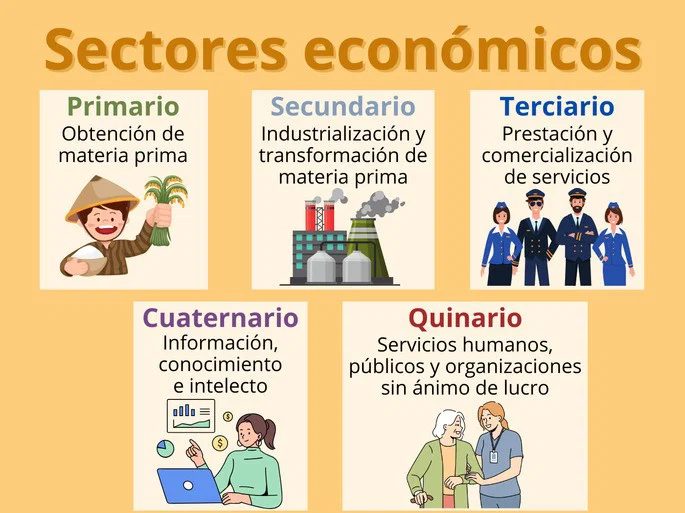
The economy is not just a whole. Divided into different sections, it explains how civilizations extract, process and sell resources. This classification helps to understand the relationship between production and trade. It also reveals why some countries grow faster than others.
The chain from raw materials to the market
An economic sector covers all stages of the product’s life cycle. It starts with the extraction of natural resources. This is the foundation. Without this step, nothing else happens.
Next comes industrialization. Raw materials are transformed. They become usable goods. Then the focus shifts to preparing for consumption. All packaging, branding and final touches are done here.
Distribution follows. The goods are move from factories to the warehouse. Finally, commercialization takes over. This is where the product reaches the consumer. In this chain, each sector plays a specific role.
Development and sector presence
A country’s level of development is closely related to the which sectors dominate its economy. Poorer nations tend to depend on primary sectors such as agriculture and mining. These sectors involve the direct extraction of natural resources;
As a country grows, so does its secondary industry, manufacturing. Factories and industries expand. This change usually results in higher wages and more advanced infrastructure.
In developed countries, the service industry, services, have a dominant position. This includes retail, finance and healthcare. The focus shifts from manufacturing products to providing experiences and solutions.
“The classification of economic sectors helps to understand how all areas of production and business are related to each other.”
Why this matters to investors and workers
Knowing which industries are growing can help you make better financial decisions. If you are looking for a stable jobs, look at the service industry. It is generally less volatile than raw material extraction.
If you are investing, consider the level of development of your target market. Developing markets typically bring growth to production and infrastructure. Developed markets can offer better opportunities in technology and services.
This simple framework reveals the structure of the global economy. It shows where there is added value and where there is risk. Understanding these divisions is the first step in making smarter financial choices.
First sector: It all starts here
The basis of the economy is in the first sector. This is the most original level of the economic pyramid. Products are not manufactured here. They are found or they are grown.
Let’s think about agriculture, mining, forestry and fishing. These sectors take natural resources directly from the earth. If a nation’s GDP is significant in this sector, it is likely that it is a developing or resource-rich country. The added value is low, but the quantity is important. Without this sector, no iron for steel. There would be no cotton in the fabric. Bread wheat would be missing.
In modern economic analysis, understanding the first sector of the economy is the key to determining a country’s basic resources. It answers the following question: If man had not done this, what would this earth produce?
The number of workers in this sector tends to be highest in developing countries. In developed countries, as efficiency improves, it decreases. Heavy work is mechanized. Now one farmer can feed hundreds of people. However, the stakes are high. Climate, soil depletion and commodity price fluctuations determine success.
Secondary industry: change and industry
Once the raw materials have been extracted from the earth, the secondary industry takes over. This is manufacturing. construction.
Here we add value by changing the shape of the material. Iron ore became a beam. Cotton becomes a shirt. Oil turns into plastic. The second economic sector is the engine of industrialization.
This industry has historically contributed to urbanization. Workers flocked to the cities in search of factory jobs. Wages are rising. Increased consumption. But it is also energy intensive. There will be waste. and exposed to global supply chain disruptions.
When you hear the word “hollowing out,” it refers to contraction of this sector. As labor costs rise, countries often struggle to keep these jobs and end up moving production to cheaper locations. However, high-tech manufacturing such as semiconductors and aerospace remains a strategic priority. It’s not just about quantity. It’s all about complexity.
Tertiary industry: services/communication
Tertiary industry is the largest industry in most developed countries. It covers services.
Physical goods in the traditional sense never change hands. What is offered in return is intangible value. Retail, hospitality, transportation, healthcare, education, finance. If you’re paying someone for their time, skills, and opportunities, you are in the tertiary sector.
This change means a transition from an industrial society to a service-oriented society. As wages rise, consumers spend less on food and household goods and more on experiences and comfort. The role of tertiary industry in economic growth is often measured by its ability to create jobs for a growing and educated workforce.
However, it is difficult to measure productivity growth here. Whether the economy is good or bad, a haircut takes the same amount of time. This can make growth seem stagnant, even as living standards improve.
Part 4: Knowledge and innovation
Not all services are created equal. The quaternary sector has emerged to describe knowledge-based activities.
This includes research and development, IT, consulting and higher education. It is the brain of the economy. Tertiary industry sells products and services, while quaternary industry sells ideas, data and innovation.
The most important questions are: * Which companies are driving technological change? * And * How do intellectual property rights shape GDP? *
This field is less sensitive to physical limitations. it is

Look at primary industries as the foundation of everything we consume. It’s not just about agriculture. It covers all activities related to the extraction of raw materials, natural resources and food. This includes agriculture, animal husbandry, fishing and forestry. In some classifications, mining is also included here. This is because digging the soil provides materials for building houses and tools.
The goal is simple: to survive. Man needs food to live. They also need shelter. The primary sector delivers both.
Why do all civilizations start here? This is because you cannot build a complex economy if you are hungry. Developing countries are often heavily dependent on this sector. This is the first step. Secondary industry cannot exist without it. There are no factories. No services. The primary sector are an essential starting point for any economic unit striving for growth.
However, raw materials do not remain as they are for long periods of time. Now the next phase begins.
Processing power: Second division
When wheat is harvested or ore is mined, possibilities are revealed. secondary sector turns this opportunity into something useful. This is the field of production and construction.
This is where the raw materials are transformed. Wood becomes furniture. Steel becomes a car. Wheat becomes bread. This segment adds value through processing. It’s not just taken from nature. it shapes it.
The transition from elementary school to upper secondary school is a key economic indicator. Countries that depend solely on agriculture may be less developed than countries with a strong manufacturing base. But the problem is that we need primary industry to feed secondary industry. No cotton, no fiber. Without steel, buildings would not exist.
The relationship is very close. If the primary industry collapses, the secondary industry will starve. This is a direct line from the field to the factory.
This connection explains why supply chain disruptions in agriculture and mining spread to global markets so quickly. Regional drought is more than just a lack of food. This means less raw materials for world industry. The health of primary industry is the lifeblood of secondary industry.
But most people think of the economy in terms of jobs they can see. It’s not dirt under the nails. But without that dirt, there would be no office building.
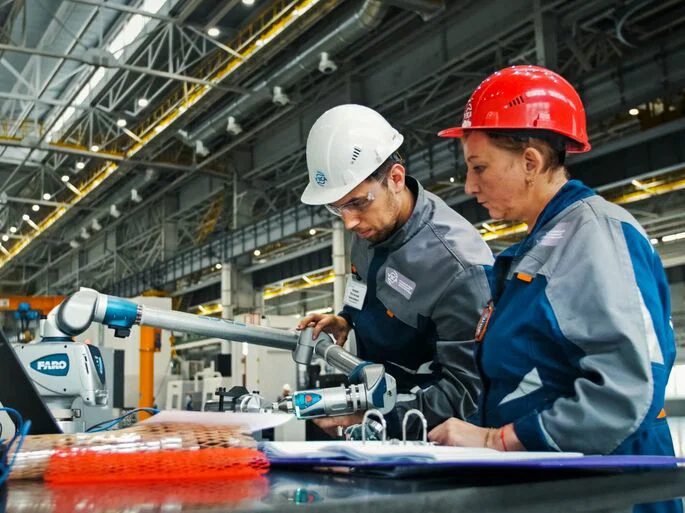
Secondary industry is an industrial engine that starts after society has moved beyond basic survival. At this point, the raw material is no longer just dirt or timber, but starts to have a price tag. This step is not optional. It is the structural core that defines the modern economy.
The core task here is simple but large-scale: converting natural resources into valuable industrial products.
Secondary industry cannot exist without the support of primary industry. Steel requires iron ore. Cars need rubber and lithium. Cotton is needed for fibers. But something magical happens along the way. This is where the value jumps. A lump of iron is cheap. Precisely designed engine blocks are expensive. Secondary industry captures this difference.
What is happening in this field?
As countries prioritize industrialization, we see tangible changes in the workforce and infrastructure. Labor moved from fields and farms to factories and assembly lines. This is not a gradual process. People tend to move quickly in search of higher wages and stability.
Typical industries are:
- Manufacturing: From household appliances to heavy machines.
- Build: Build the infrastructure to support the industry yourself.
- Food processing: The transformation of raw plants into goods that can be stored and transported.
- Car: A classic symbol of industrial performance.
- Textiles and clothing: One of the earliest forms of large-scale industrialization.
In some cases, the lines may blur. Extractive industries such as mining and oil drilling, although technically close to primary industries, require significant investment in processing and infrastructure and are therefore often concentrated here. The distinction matters less than economic production.
Technology and infrastructure as catalysts
Industrialization does not only change what is produced. It changes the way things move.
The demand for raw materials and the need to distribute finished products create feedback loops. We need better roads. We need railways. Ports are needed. Since factories are useless unless they can efficiently import raw materials or export products, secondary industry contributes to the development of transportation networks.
Technology has accelerated this process. The journey of automation started with small-scale devices (mechanical looms, steam engines) and progressed to robotic arms and artificial intelligence-controlled logistics. The goal is always the same: to improve quality while reducing personnel costs. This change has improved living standards, but at the same time disrupts communities. When the factories close, the old towns disappear. New cities have grown up around industrial areas.
Why it matters in financial decisions
Understanding the secondary industry is not just an academic matter. It explains where value is created and where jobs have historically moved.
- Added value: Secondary industry is the most important sector of added value in the supply chain. Raw materials are commoditized. Industrial products are branded and specialized.
- Employment transfer: As the economy matures, labor moves from primary industry to secondary industry and then to tertiary industry (service industry). Knowing what stage a country is in can predict labor costs, consumer behavior and market stability.
- Infrastructure Investments: Countries that invest heavily in industrial capacity betting on long-term growth. This is often associated with increased demand for energy, logistics and financial services.
Secondary industry is the bridge between survival and prosperity. It turns potential into product. But this is not the end. When industrialization reaches its peak, the economy typically shifts again, toward services and information. But without this industrial step,

Tertiary industry is not just about transporting goods. This is the transfer of value through services.
As civilizations become highly industrialized, the focus changes. It is no longer enough to feed and clothe people. The economy began to prioritize services aimed at residents and more and more outsiders. Tourism, banking, education, hotels, travel agencies and financial services define this industry.
What is the key difference? The products are not necessarily tangible. It can be experience, trade or expertise.
This field continues to expand as technology advances. It consumes more of the economy. As a result, the main industries such as agriculture, mining and extractive industries lost their dominant position. When machines do most of the heavy lifting and the economy runs on information and interaction, we don’t need as many people as we do to mine resources.
Quaternary Sector
This is where economics gets smart.
Quaternary industry is a part of tertiary industry, but it deals specifically with knowledge, information and technology. This is not just an “everything” service. This is highly specialized knowledge.
Think software development, research and development (R&D), consulting and IT services. These are not just jobs. They are the driving force behind innovation.
Why is this distinction important?
Because it means a transition from an economy based on work to an economy based on ideas. In the fourth economy, value is created through patents, algorithms, data analysis and strategic planning. Products are often intangible until they are brought to market, but their impact is tangible.
Consider the difference between a travel agency (tertiary) and a data analytics company optimizing global supply chains (quaternary). Both sell services. One sells a booking. The other sells efficiency and competitive advantage.
The quaternary sector continue to evolve as routine tertiary tasks, such as basic accounting and standard customer service, are handled by automation. It requires higher education, specialized skills and constant adaptation. This causes labor market fragmentation. Highly educated knowledge workers are increasing. Routine service workers face pressure from automation.
The result is further polarization of the economy. The gap between the creators of information and the providers of essential services is growing. This isn’t a bug. This is a characteristic of economic development.
Countries that invest heavily in education, research and development infrastructure, and digital connectivity tend to dominate the fourth sector. They export both physical goods and intellectual property. This changes the trade balance and geopolitical influence.
But there’s a problem.
Information is fragile. It requires constant updating. What is valuable today, such as a particular coding language or regulatory framework, may be obsolete tomorrow. Quaternary industry requires lifelong learning. This is not a career path. This is a constant state of re-education.
This also raises questions about access. If the most valuable jobs require elite training and specialized technical infrastructure, who will be left behind? Tertiary industries absorb those who cannot make the jump to quaternary industries, but these jobs tend to be low-paying and easily automated.
The economy does not just grow steadily. Moves sideways and inwards.
From digging into the ground, building factories, selling services and creating knowledge. Each stage replaces the previous stage as the primary employer. But the transition was not smooth. It leaves people behind. It changes the meaning of the word “work”.
We’re not done shifting

We’ve already covered the quaternary sector, the brain of business, an economy based on knowledge and intelligence. These include research, consulting and information management. But there is another layer on top of that. A layer of things that even algorithms can’t touch.
This is the quinary sector.
Think of this as a “higher level decision-making layer”. It’s not just about information. It’s about “applying” it in a complex, human-centered way. If the quaternary sector is the library, the quinary sector is the debating club, the courtroom and the meeting room where the final judgments are made.
The Human Element in High-Stakes Economics
Quaternary industries are directly derived from tertiary industries (service industries) and quaternary industries (information industries), but distinguish between activities that require high levels of decision-making, judgment, and cultural influence.
These roles cannot be fully automated. Why? Because they rely on intuition, moral reasoning, and complex social dynamics.
Key examples include:
- Top-tier government and policy making : Decide how the country responds to crises.
- **Executive leadership: The CEO and board members develop a long-term corporate strategy.
- Healthcare specialists : Senior surgeons and diagnosticians who deal with unclear cases.
- Legal judges and senior attorneys : interpret the law in new and unprecedented situations.
- Cultural and entertainment producers : Directors, award-winning writers and artists who define society’s values.
“In the fifth dimension, human judgment replaces data analysis.”
Why it matters to your financial decisions
You might be wondering why this classification is important to people trying to make better money moves. It’s very simple. **Value shifts upward as automation increases.
In the postal industry, the digitization of daily services (tertiary industry) is advancing more and more. Everyday information work (in the quaternary period) is increasingly supported by artificial intelligence. The only things of value are those that require irreplaceable human judgment.
If you are looking for a career path or business opportunity, ask yourself the following questions:
- Is this task based on rules? (It’s automated.)
- Is this task data-based? (Enhanced by artificial intelligence.)
- Is this task judgment-based? (Humanize it.)
The $5 industries tend to be the ones with the highest profit margins and job security because they are the hardest to mechanize.
The Blurry Line
The boundary between quaternary and quinary is not a wall. This is a gradient.
Data scientists (level 4) build models. The chief strategy officer (quinary) decides whether the future of the company will bet on this model. Both deal in information. One deals in probability. The other involves risks and consequences.
As the economy develops, quinary skills are needed: leadership, ethical reasoning and creative direction. There are a limited number of people who can do these things well. This is the core economic dynamic here.
And the next step? How can we measure the output of something as intangible as judgment? This is a real question.

The Quinary sector did not emerge out of nowhere. It arose with the post-industrial revolution, when specialized interpersonal services became common. Like the Quaternary sector, it is separate from the wider category of the Tertiary sector, but has a unique focus on caring for people and community.
This has nothing to do with manufacturing or standards consulting. The Quinary sector include top executives in governments and large corporations, and most importantly, high-level decision-making in non-profit organizations. Think of this as the “economy of judgment and conscience”.
Welfare and public safety
What’s going on here? It combines hospitality, elderly care and humanitarian aid. You see NGOs feeding the hungry and providing medical care to those who cannot afford it. It is also the backbone of public safety, including police, civil defense, firefighters and emergency services.
But here’s the problem. Although these figures define the Quinary sector sign in modern discourse, they historically emerged in parallel with another sector. As civilizations industrialized, they needed structure. Needs protection. It requires order. The Quinary sector refines this need into a formal economic category that focuses on human well-being rather than production.
4-part division
In addition to the first and fifth level divisions, economies are often divided differently based on capital ownership. This is not just an academic classification. It determines where your taxes go and who benefits from your work.
1.Public sector
This is the state. This applies not only to state-owned enterprises, but also to executive, legislative and judicial authorities. When the state runs an electricity company or a postal service, this is a public sector activity. It is financed by taxes, not by market demand.
2.Private sector
Most of us spend the day here. This includes all privately owned companies. These companies are for-profit and usually belong to the tertiary industry (services) or the secondary industry (manufacturing). They are driven by shareholders, not voters.
3.Voluntary sector
This is often referred to as the third sector and is the domain of NGOs and non-profit organisations. This is not about profit maximization. It’s about social impact. Whether local food banks or international charities, these organizations fill gaps that are often overlooked by the public and private sectors.
4.External sector
This includes foreign intervention. Multinational companies operating in the national economy belong to this. Their profits flow outwards, hampering local economic indicators, but also bringing in capital and technology.
Gray zone: Hybrid companies
The lines are not always clean. We often see hybrid companies that arise from the friction between public and private interests. The capital of these companies is divided, part state, part private ownership and in some cases foreign capital.
Why is this important? Because hybrid models aim to balance efficiency and public service. Private railways may be faster, but do they serve unprofitable rural lines? Fully state-owned companies can be supported, but they are inefficient. Hybrid models are a compromise. It’s very messy. This often causes political conflict. But it reflects reality.
We tend to look for cool categories. Basic. Secondary. Third. Quinary. Public. Private. The real economy doesn’t care about your label. It has to do with value, work and survival. These areas overlap. Capital is mixed. And the distinction is often blurred depending on whether you’re looking at balance sheets or street level.
Which side of the two do you think you’re on?