
The idea sounds logical at first glance. If a nation accumulates more gold, silver, or digital currency, it should theoretically become wealthier. That was the central assumption of mercantilism, the dominant economic philosophy in Europe from the 16th to the 18th century. Mercantilists believed that trade was a zero-sum game where accumulating money equated directly to national power and prosperity. They pushed for a “favorable” balance of trade, aiming to export more than they imported to keep wealth flowing inward.
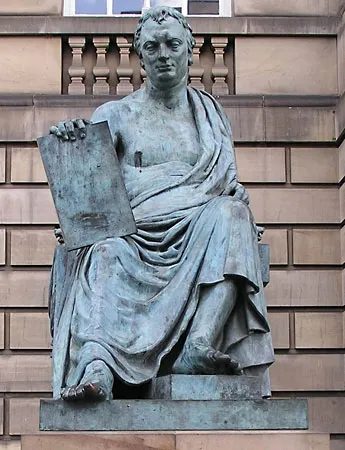
The quantity theory of money dismantled this logic. Developed by thinkers like John Locke in the 17th century and refined by David Hume in the 18th, the theory argues that money is not wealth itself. It is merely a medium of exchange. When a nation hoards more money without increasing the production of goods and services, the result is not prosperity. It is higher prices.
This mechanism explains the core relationship between inflation and the money supply. If the quantity of money in circulation rises faster than the output of goods, each unit of currency buys less. The cost of everyday items climbs. This isn’t just a modern phenomenon. It has been a primary tool for analyzing inflation and deflation for centuries.
The implications for trade were immediate. If an influx of foreign currency simply drives up domestic prices, then a trade surplus offers no real advantage. The increased money supply eventually erodes the purchasing power of that wealth. The mercantilist goal of stockpiling money becomes self-defeating. Higher prices make exports more expensive and imports cheaper, naturally correcting the trade imbalance.
This insight shifted economic policy. In the 19th century, the quantity theory provided the intellectual backbone for the move away from protectionism and toward free trade. Economists could now argue that limiting trade to hoard currency was irrational. The focus shifted to increasing actual production rather than manipulating money stocks.
The theory didn’t stop there. It became a fundamental component in understanding business cycles throughout the 19th and 20th centuries. Central banks began to look at money supply data to predict economic downturns or overheating. It also influenced theories on foreign exchange rates, linking currency values directly to the relative money supplies of different nations.
Today, the concept remains a lens for viewing inflation. When governments print money to fund deficits, the theory warns of potential price rises. It doesn’t guarantee inflation will happen instantly. Other factors, like velocity of money and consumer confidence, play roles. But the basic premise holds: change the quantity of money, and you change the price level.
The debate isn’t really about whether the theory is right or wrong. It is about how much control central banks should have over that quantity. Too little money causes deflation and stagnation. Too much causes inflation and uncertainty. Finding the sweet spot is difficult.
History shows that treating money as wealth leads to policy errors. Treating it as a tool requires discipline. That discipline is hard to maintain, especially when political pressures mount. The quantity theory remains a warning. More money does not mean more value. It just means the numbers on the price tag get bigger.

The quantity theory didn’t just fade away in the 1930s; it got hammered.
Monetary expansion looked useless. The Great Depression dragged on, prices crashed, and central banks found that pumping money into the system didn’t jumpstart the economy like they hoped. Investment dried up. Governments couldn’t spend their way out of the hole fast enough. Economists pivoted. They argued that real demand—the actual level of investment and government spending—mattered far more than the sheer volume of money in circulation. The money supply seemed irrelevant when everyone was too broke to buy anything anyway.
Then came the 1960s. The pendulum swung back hard.
Post-WWII inflation became the new headache. It wasn’t deflation anymore; it was too much money chasing too few goods. Milton Friedman and Anna Schwartz stepped in with A Monetary History of the United States (1963). Their empirical work didn’t just suggest a link between money and prices; it quantified it. They showed a consistent, long-run relationship that couldn’t be ignored. The prestige of the quantity theory returned, not as a philosophical ideal, but as a practical tool.
This shift changed how governments approached policy. You couldn’t just ignore the stock of money if you wanted to control inflation. The theory implied that maintaining price stability and full employment required careful management of the monetary base. If you printed too much, you got inflation. If you printed too little, you risked stagnation.
It’s still debated today. New models emphasize expectations and financial frictions. But the core lesson from Friedman and Schwartz remains embedded in central banking: money matters. Ignoring it is a gamble.
Consider how modern quantitative easing mirrors this tension. When central banks expanded balance sheets post-2008, critics warned of hyperinflation. It didn’t happen. Why? Velocity collapsed. Money sat in banks rather than circulating. Does this disprove the theory? Or does it just complicate the mechanism?
The relationship between money supply and inflation isn’t a simple lever. It’s a complex system. But when you look at historical data, especially the long runs, the signal is hard to miss. Policy makers still treat the money supply as a key variable. Not the only one. But a necessary one.