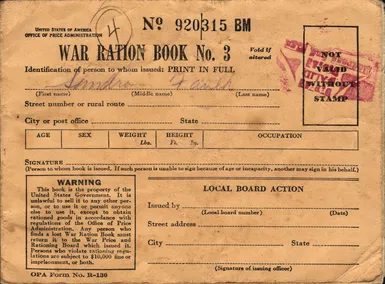
A U.S. ration book from the World War II era serves as a stark reminder of how governments manage scarcity. Rationing is not just a historical artifact; it is a specific economic mechanism. It involves the planned, restrictive allocation of scarce resources. You see it during wars. It appears during famines. It surfaces in any national emergency.
The goal is simple. Keep essential goods flowing to where they are needed most.
The Spectrum of Control
Rationing rarely arrives as a single policy. It evolves. Often, it begins with informal measures. These are the early warnings. The government might admonish consumers to cut back. Suppliers might independently allocate limited stock. These steps precede formal controls. They are the first line of defense against collapse.
Once formal systems take hold, the methods become more rigid. One approach restricts use. It prohibits less important applications of a commodity. Food might be reserved for troops over civilians. Fuel might be limited to essential travel.
Another method limits quantity. This can mean restricting the hours goods are available. Or it assigns strict quotas. Every approved claimant gets a set amount. You get what is allotted. You cannot buy more.
Point Systems and Value Limits
Not all goods fit into neat boxes. Some items cannot be standardized by weight or volume. For these, the government uses value limits. Consumers decide what to buy. The only constraint is the dollar amount they can spend.
Then there is the point system. This method assigns a point value to each commodity. Each consumer receives a set number of points. This system emerged during periods of critical and increasing shortages. It was a response to a specific behavioral shift.
People began substituting unrationed items for rationed ones. They sought out alternatives. This behavior spread the shortage across the entire economy. The point system curtailed that flexibility. It forced compliance through a finite currency of choice.
“Point rationing… is employed during periods of critical and increasing shortages when individuals begin substituting unrationed for rationed items, thereby spreading shortages.”
The Savings Imperative
Rationing creates a surplus of unspent cash. If people cannot buy butter or tires, they still have income. What do they do with it?
The government exhorts them to save. The preferred vehicles are government bonds. Savings bank deposits are also encouraged. The logic is explicit. Unspent money must not fuel the black market. It must not drive up prices for unrationed items.
Saving becomes a civic duty. It stabilizes the economy by removing liquidity from the consumer market. It redirects capital toward the war effort or national recovery.
The system worked because it combined restriction with redirection. You could not have everything. But you could contribute to the greater good. Or you could lose everything to inflation and scarcity. The choice was stark.