









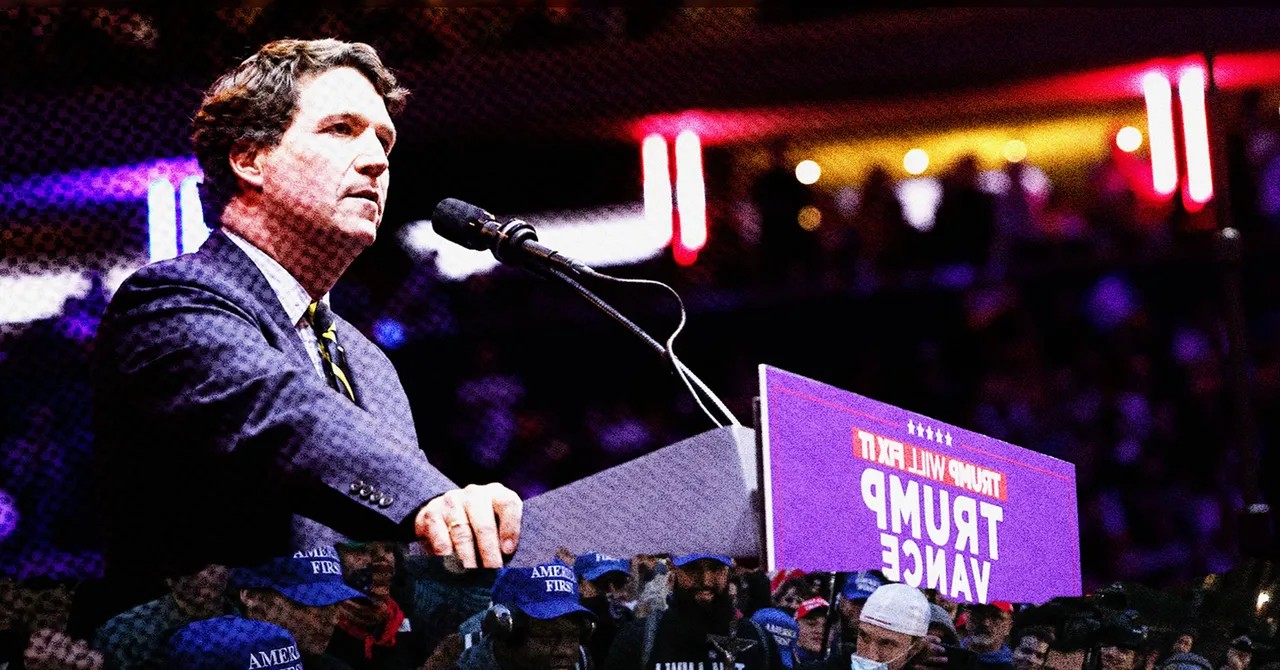
The Republican Party isn’t just fractured—it’s erupting. As Donald Trump continues to wield his influence over his supporters, a new battlefront has emerged: the rise of powerful online influencers. These figures, with their massive followings and provocative content, are becoming central players in the conservative movement, and their influence is reshaping political discourse.
The GOP Civil War: Fueled by Social Media
The conflict within the Republican Party reached new heights after President Trump targeted Nick Fuentes, a controversial online personality known for his far-right views. Trump’s aggressive response to Fuentes ignited a firestorm, exposing deep divisions within the GOP. But this isn’t just about one figure; it’s about Trump’s broader strategy to weaponize online influencers to advance his agenda.
Influencers as Tools for Policy
The Trump administration has created its own propaganda machine to justify its law-and-order immigration policies. Social media platforms have become fertile ground for spreading misinformation, with influencers amplifying divisive narratives. This manufactured outrage provides fertile ground for the administration to push its agenda, even if it means twisting facts for political gain.
Cuomo Courts the Right Wing
In a surprising move, Andrew Cuomo’s campaign has turned to far-right influencers in the race for NYC mayor. As the election winds down, Cuomo is strategically aligning himself with online voices that dominate conservative spaces. This shift marks a dramatic departure from his usual political stance and signals a growing influence of digital culture in mainstream politics.
Trumpworld’s Shadow Cabinet
The inner workings of Trump’s administration are riddled with conflict. His cabinet secretaries, often handpicked for their loyalty, are openly hostile toward certain figures. The infamous “Worst, Bondi” refrain reflects the deep divisions within Trump’s circle, where loyalty to the president often trumps professional competence.
The Meme That Landed a Man in Jail
After reposting a meme about Donald Trump, Larry Bushart was charged with threatening a school following the shooting of Charlie Kirk. This incident highlights the dangerous consequences of online radicalization, where memes and social media posts can escalate into real-world violence. It also underscores the Trump campaign’s eagerness to recruit even the most extreme voices.
The Shutdown Game: Federal Workers Caught in the Crossfire
The federal government shutdown isn’t just a political maneuver—it’s a battle for control. Federal employees are caught in the middle, unsure of their futures while the political elite wage war. This uncertainty has created a ripple effect, with workers wondering about their jobs while the debate rages on.
The Internet Ignored: Democrats’ Misstep in the Digital Age
As Donald Trump returns to the White House, Democrats still struggle to understand the power of the internet. A digital strategist recently lamented that Democrats remain overly cautious when it comes to engaging with online communities. This disconnect could prove costly as the political landscape continues to shift.
Truth Social vs. Truth: Trump’s Social Media Empire
Donald Trump’s Truth Social platform is expanding into new territory, competing with prediction markets like Polymarket. This move signals Trump’s ambition to dominate not just social media but also the online prediction economy. As crypto-based platforms gain traction, Truth Social aims to position itself as a key player in this growing industry.
The Chilling Effect: When Death Threats Silence Academia
Rutgers historian Mark Bray, who wrote a book about Antifa, was forced to flee the United States after facing death threats from far-right influencers. His attempt to leave the country was blocked at the airport, highlighting the dangerous climate for academics and critics of the right-wing movement. This incident underscores the escalating threats faced by those who dare to dissent.
Debunking the SNAP Myth
With SNAP benefits set to expire, far-right influencers have launched a campaign claiming the program is primarily used by immigrants. This narrative, however, is a myth. SNAP benefits are a vital resource for low-income families, regardless of their background. The misinformation campaign reflects a broader effort to weaponize poverty and blame vulnerable populations.
YouTube Censorship Fueled by Influencer Fury
Republicans have claimed that the Biden administration attempted to censor YouTube, but evidence points to the opposite. Interviews with employees suggest that the company’s legal team was defending against claims of political influence. The controversy highlights the ongoing battle between digital platforms and political actors.
San Francisco Prepares for a Federal Infiltration
Amidst growing concerns about federal law enforcement presence, San Francisco is bracing for an influx of government agencies, whether or not a formal surge is declared. The city is preparing for the worst, showcasing the anxiety and uncertainty that comes with political polarization.
Conclusion: The Right Wing Fractured
The rise of online influencers has ignited a civil war within the Republican Party. Trump’s ability to leverage these voices has created a volatile ecosystem where facts are secondary to outrage. As the right-wing continues to splinter, the consequences will ripple across American politics, reshaping the landscape in unpredictable ways