
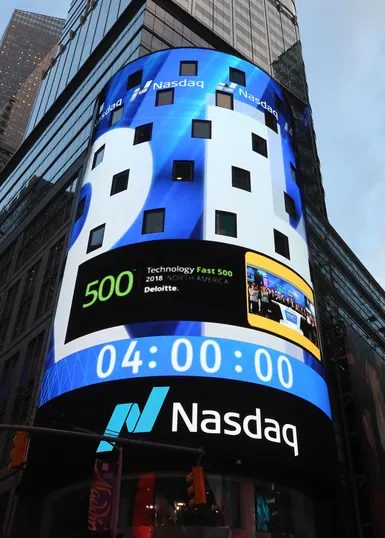
The Nasdaq Stock Exchange operates out of New York City, specifically near Times Square, but its roots are far less glamorous than the neon billboards suggest. It is an American company that runs multiple U.S. securities exchanges, including the main Nasdaq Stock Market, four options exchanges, and several equity markets. It also runs venues in Canada, the Nordic countries, and the Baltics. Headquartered in New York and regulated by the SEC, it is one of the largest stock exchanges in the country by trading volume.
The name is an acronym for the National Association of Securities Dealers Automated Quotations. That mouthful tells you exactly what it was: a system that replaced phone calls with computerized price quotes. Today, the brand includes major indexes like the Nasdaq Composite and Nasdaq-100, and it has a reputation as the go-to listing venue for technology and high-growth companies.
Why Electronic Trading Matters for Modern Investors
Nasdaq changed how money moves. It led the shift from old-school open outcry trading, where people shouted orders at each other, to fully electronic systems. What started as a quote machine in the early 1970s became the global standard for how stocks are bought and sold.
For anyone trying to understand current market structure, this history matters. If you are wondering how Nasdaq became the dominant electronic exchange, the answer lies in its ability to solve a specific problem: the chaos of over-the-counter (OTC) trading.
1971: The Start of a Digital Market
Nasdaq launched on February 8, 1971. The goal was clear. Automate the messy, opaque market for OTC securities. Most of these stocks were not listed on the major U.S. exchanges. They traded in the shadows, with prices scattered and hard to track.
At that time, Nasdaq was not a registered national securities exchange. That status didn’t arrive until an SEC action in January 2006. It was an electronic quotation system run by the National Association of Securities Dealers (NASD). You could see prices on a screen, but you still had to pick up the phone to arrange trades. The rules and governance were set by the NASD, not a centralized exchange body.
Who Built the Foundation?
Gordon Macklin is the key figure in this early chapter. He led the organization from its founding in 1971 and served as its first president from 1975 to 1987. Often called the “father of Nasdaq,” Macklin guided the entity through its formative years. He took it from a simple electronic quote display to a credible, competitive marketplace.
The transition from a quote screen to a trading hub was not instant. It required years of building trust and infrastructure.
If you are comparing which exchange handles the most tech stocks, Nasdaq’s history explains its current dominance. It started by fixing a broken market for smaller, unlisted companies. That focus on technology and growth became its identity over the decades.
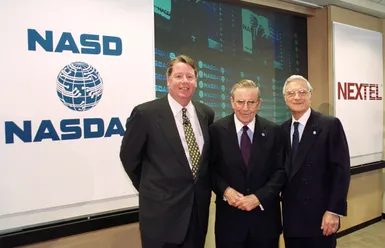
From phone lines to screens: How Nasdaq fixed the OTC mess
The landscape before Nasdaq was chaotic. Over-the-counter (OTC) shares traded strictly over the phone. No central data hub, no unified communications layer. Prices drifted. One dealer quoted one number, another dealer quoted a different one. It was slow, inconsistent, and opaque.
Nasdaq entered the scene not as a full exchange, but as a quote display system. It automated price quotes on a centralized electronic screen. It brought structure to a fragmented market. It did not execute trades yet. You still had to pick up the phone. But the information flow changed. It became faster. It became transparent.
This early phase established a critical advantage. By standardizing price information, Nasdaq created a baseline that the old decentralized system simply could not match.
Why tech companies chose Nasdaq over the NYSE
The association between Nasdaq and Silicon Valley wasn’t accidental. It was strategic.
When Intel (INTC) held its initial public offering in October 1971, it set the tone. Then Apple (AAPL) and Microsoft (MSFT) followed. These listings cemented Nasdaq as the preferred venue for growth companies.
But why did they go there? Partly it was culture. The startup vibe in Silicon Valley aligned with Nasdaq’s identity. But mostly, it was practical. The listing requirements at the New York Stock Exchange (NYSE) and American Stock Exchange (AMEX) were heavy. Nasdaq’s were looser. For startups at the forefront of the digital computer era, that flexibility mattered. They didn’t need the NYSE’s prestige; they needed access to capital and a market that could handle their volatility.
Nasdaq offered two specific mechanisms that gave it a disruptive edge:
- Real-time quotes. Human-driven communication systems were too slow. Nasdaq’s electronic updates were faster and more accurate. This disrupted virtually every major exchange that relied on manual processes.
- Open architecture. This allowed third-party participants, like institutional market makers, to plug directly into the system. It created a more competitive environment. It increased liquidity. It wasn’t a closed club; it was an open network.
In 1983, Nasdaq introduced depth-of-book (“Level II”) data. This was a game-changer for visibility. Traders could see bids and offers at multiple price levels simultaneously. Before Level II, you only saw the top quote. Now, you saw the supply and demand behind it. You could interpret market sentiment. You could see where the real orders were sitting, not just the best available price.
Black Monday: The crash that forced automation
In 1987, Nasdaq was still a second-tier market. It had been operating for 16 years. It was known for smaller, growth-oriented companies. It displayed quotes electronically, but execution was still manual.
Then the market crashed on October 19, 1987. Known as Black Monday, this event exposed Nasdaq’s structural weakness.
As prices plunged, Nasdaq market makers withdrew their quotes. They stopped taking phone orders. Retail investors were stuck. They held shares that were losing value rapidly. Buyers who wanted to step in at discounted prices couldn’t execute trades. The system froze.
Meanwhile, the NYSE floor, while overwhelmed, maintained a semblance of order. The crash damaged Nasdaq’s reputation for reliability. It reinforced the perception that electronic quoting without electronic execution was unstable.
Regulators stepped in. They mandated the adoption of the Small Order Execution System (SOES). Created in 1984, SOES automatically filled orders up to 1,000 shares. A year later, SelectNet followed, allowing larger trades to be executed electronically. This shifted transactions away from phone-based processing. It was no longer just a display system; it was becoming a trading platform.
How ECNs and the internet changed the game in the 1990s
By the mid-1990s, the landscape had shifted again. Nasdaq captured nearly half of all equity trades in the United States. The dot-com boom was starting. Technology was rising.
Electronic communication networks (ECNs) moved into the mainstream. These systems had roots going back to Instinet in 1969. They allowed buyers and sellers to match directly, bypassing the need to route everything through market makers.
In 1997, the SEC issued the Order Handling Rules. These rules required ECN quotes to be displayed alongside market-maker quotes on Nasdaq. This integration normalized electronic execution. Efficiency improved. Transparency increased.
At the same time, household internet connections got faster and more reliable. Brokers like Ameritrade and E*TRADE came online. Retail investors gained direct electronic access to trade on Nasdaq-listed markets. This was a democratization of financial access. You didn’t need a brokerage floor anymore. You needed a computer.
This shift paved the way for the commission-free trading and mobile apps of the 21st century. By the end of the 1990s, Nasdaq was synonymous with tech innovation. Apple, Microsoft, Cisco (CSCO), and Amazon.com (AMZN) were on its books. It wasn’t just an exchange anymore. It was the standard-bearer of the tech boom.
The transition from phone-based chaos to electronic automation wasn’t just an upgrade. It was a fundamental restructuring of how capital moved. And it set the stage for the next wave of disruption.
The dot-com era ended in a crash that wiped out 80% of the Nasdaq Composite’s value. From a peak of 5,048 in early 2000, the index slid to 1,139 by October 2002. Investors had piled into internet startups with reckless enthusiasm, but the exit was brutal.
That collapse did not kill the exchange. It actually cemented its reputation. Tech companies still chose Nasdaq for listings. The market absorbed the shock and kept moving.
How decimal pricing changed trading costs
Right after the bust, the industry shifted from fractional quotes to decimal ones. The NYSE and AMEX did this first, and Nasdaq followed. Ticks got smaller. A penny became the minimum price move.
This seemed minor. It wasn’t. Narrower bid-ask spreads meant lower transaction costs. Retail traders and institutions both benefited. Volume went up because it got cheaper to trade.
Nasdaq itself went through a structural overhaul during this time. In 2002, it started trading over the counter under the ticker NDAQ. By 2005, it was a public company. Then, in 2006, the SEC gave it the green light to become a national securities exchange. It stopped being a system owned by NASD members and became a shareholder-owned entity, just like the NYSE.
Which acquisitions expanded Nasdaq’s reach
Nasdaq didn’t just wait for the rules to change. It bought its way out.
- 2005: Acquired Instinet’s INET ECN. This boosted its matching engine and improved trading tech.
- 2008: Bought the Philadelphia Stock Exchange (PHLX). This gave Nasdaq a serious foothold in the options market and grew its equity market share.
- 2008: Acquired OMX, the operator of stock exchanges in the Nordic and Baltic regions. This was the start of its global expansion.
- 2008: Purchased the Boston Stock Exchange (later renamed BX Options) and launched the Nasdaq Options Market (NOM).
These moves weren’t random. They were a clear strategy to expand globally and build out the U.S. options business.
The 2010s and early 2020s brought the next wave of milestones. These reflected Nasdaq’s growing global reach and its push into new technology spaces, particularly ESG and cloud infrastructure.

The cost of innovation: technical failures and regulatory friction
Speed was the promise. Reliability was the bill.
The 2012 Facebook IPO remains the most expensive lesson in exchange infrastructure. Nasdaq’s systems buckled under the load, causing delays and order errors that bled millions from institutional portfolios. The SEC fined the exchange $10 million, citing “poor systems and decision-making.” To cover the losses suffered by investment firms, Nasdaq paid out $62 million in compensation. It was a public failure of the very technology that had defined its identity.
Then came August 2013. A technical glitch halted trading for all Nasdaq-listed stocks for three hours. The question was no longer whether the platform could handle volume. It was whether it could handle a bad Tuesday afternoon.
These aren’t isolated incidents. They are the counterweight to the 2022 move to migrate matching engines to Amazon Web Services. Being the first global exchange to run a major regulated market on the cloud is a technical milestone. But it also means the failure modes are different now. Cloud infrastructure brings scalability, yes, but also new layers of dependency.
Data access and the fairness debate
The money in modern exchanges doesn’t just come from listing fees. It comes from information.
In the mid-2010s, Nasdaq and NYSE drew fire for pricing depth-of-book and proprietary data feeds at levels traders called excessive. The argument was straightforward: if you want real-time visibility into the order book, you pay a premium. Regulators stepped in. In 2018, the SEC reversed certain price increases.
The fight didn’t end there. Legal challenges continued through the 2020s. As of 2025, the disputes remain unresolved. Nasdaq is now phasing in a three-year inflation-linked adjustment to data-feed pricing. This mechanism ties fees to economic reality, but it doesn’t silence the criticism that market data has become a gatekeeper for institutional edge.
The Pathfinders episode in 2017 sharpened the blade. The exchange launched an analytics tool tracking the buying and selling behavior of institutional investors. Critics said it handed subscribers an unfair advantage, creating a vector for market manipulation. Nasdaq pulled the product the same year under regulatory pressure. The lesson was clear: transparency tools can cross into territory that feels like insider advantage.
Shadow of Madoff and the credibility gap
You cannot discuss Nasdaq’s history without the name Bernie Madoff.
Madoff served as chairman of the Nasdaq Stock Market. His firm was one of the exchange’s most active market makers. When his Ponzi scheme collapsed in 2008, it didn’t just destroy investor trust in one firm. It cast a long shadow over the institution he had led. The association damaged credibility for years. It forced Nasdaq to prove, repeatedly, that its governance and oversight were distinct from the fraud that had been committed under its roof.
The architecture of modern trading
The trajectory from 2012 to 2025 reveals a pattern. Innovation is constant. Risk is constant.
- 2012: Joined the United Nations Sustainable Stock Exchanges initiative, aligning with global ESG efforts.
- 2016: Acquired the International Securities Exchange from Deutsche Börse Group, adding three electronic options exchanges.
- 2017: Adena Friedman became CEO, the first woman to lead a major U.S. stock exchange.
- 2022: Began migrating matching engines to AWS.
Each step changed the risk profile. ESG alignment brought new compliance requirements. The ISE acquisition expanded the options footprint, increasing complexity. Cloud migration shifted operational risk from on-premise hardware to shared infrastructure.
Nasdaq started as an electronic quote distribution system. It ended up as a global marketplace where technology companies raised capital and data became a primary asset. The rise paralleled the spread of tech into households and boardrooms. It helped move electronic trading from novelty to norm.
The trade-off is visible in the ledger. For every milestone in speed and scale, there is a corresponding entry in fines, halts, and legal battles. The question for any investor or trader isn’t whether Nasdaq is innovative. It is whether the price of that innovation is a cost you can absorb when the system stumbles.