
Globalization is more than just a buzzword. It is the mechanism that transforms the world into a single, interconnected market. This change is no accident. It is driven by capitalism’s constant need to expand trade, production and consumption. Technology, especially the Internet, has acted as an accelerator.
The result is a complex web of economic, political and social connections. The market is no longer local. Supply chains cover every continent. Communication is immediate. However, this integration comes with trade-offs.
1. Free trade
At the heart of globalization is the concept of free trade. The goal is simple: remove obstacles. Tariffs, quotas and regulations cause friction. The goal of free trade is to remove this friction.
This approach allows goods and services to move across borders with as little disruption as possible. Companies can get the materials from the cheapest source. They can produce where labor is most efficient. Consumers get access to a larger selection of products at a lower price.
But it’s not all good news.
Domestic industry in developed countries often struggles with cheap foreign producers. Jobs move. The community is shrinking. The benefits of free trade are far-reaching, but the costs are concentrated.
Who will win? Multinational corporations. Consumers with disposable income.
Who will lose? Workers in protected sectors. Small and medium-sized companies that cannot expand globally.
The debate is not whether we should trade or not. The question is who bears the burden of opening the borders. and how governments respond to disruptions.
2. Industrialization
The forces behind global trade agreements
Globalization does not happen alone. It is driven by the industrialization of developing markets and the strategic opening of borders. When countries sign free trade agreements, they do more than lower tariffs. They attract foreign direct investment in industry. The shift from agriculture to industry creates a ripple effect.
The logic is simple, but also cruel. Companies moved production to places where labor was cheaper and regulation was weaker. This will reduce costs for consumers around the world. At the same time, however, the industrial base of high-wage countries hollows out. The result is a complex web of dependencies. The phone, designed in California, is assembled in Vietnam from parts coming from South Korea. Value chains are fragmented.
How industrialization promotes economic growth
The main purpose of these agreements is to expand the market. But the real gain for importing countries is economic productivity. When a country industrializes, it rises in value. The export of raw materials stops exporting. starts exporting finished goods.
This change requires capital. Requires infrastructure. We also need a workforce that knows how to use machines. Trade agreements often include provisions on intellectual property rights and labor standards to promote this practice. Without them, the risk of “racing to the bottom” increases. Wages stagnate. Safety standards are falling.
Compromises for rapid industrialization
It’s not all smooth sailing. Industrial transitions often cause social and environmental costs.
- Deterioration of the environment: The rapid expansion of factories increases carbon dioxide emissions and local pollution.
- Job Displacement: People rushed to factory jobs in the cities, and agricultural workers lost their jobs.
- Economic instability: These economies have become highly vulnerable to global supply chain disruptions.
Consider the impact on local markets. When trade agreements eliminate tariffs on cheap imports, local artisans and small manufacturers can disappear overnight. Consumers pay less. The local economy suffers.
Where is this happening now?
This dynamic is most evident in Southeast Asia, Latin America and parts of Africa. Countries like Vietnam and Bangladesh are taking advantage of trade agreements to become manufacturing hubs. They traded low wages for rapid industrial growth. At the same time, traditional industrialized countries such as the United States and parts of Europe are struggling to adapt to the post-industrial reality.
The question is not whether industrialization is good or bad. It’s about who wins and who loses. The purpose of these agreements is to expand the market. But the benefits are rarely evenly distributed.
“Globalization creates efficiency, but it also creates winners and losers. The political challenge is to manage this gap.”
The next phase of the story describes how these industrialized nations began to innovate beyond simple assembly lines and create their own brands and technologies. The game is changing.
Globalization is not just about the movement of goods. It transfers capital. The powerful economy of industrial development had a ripple effect. Developing countries, especially Latin American and Asian countries, are catching up. They were industrialized quickly. This is no accident. This is structural.
The result is deeper economic integration. Borders are less important for trade flows. Jobs are created in factories that did not exist 10 years ago. However, this integration requires a nervous system. A way to move value in time and space.
The structure of global capital
You cannot have global trade without a mechanism to settle it, global trade is impossible. The global financial system was born to solve this problem. It is not a single entity. It is a network of central banks, commercial institutions and regulators.
Its main function is risk management. and liquidity.
When a Mexican company wanted to sell its products to Germany, it needed a way to convert pesos into euros at a predictable exchange rate. Credit is needed to cover the gap between production and payments. The financial system provides a channel for this flow.
Why structure matters to wallets
Most people think of finance as abstract. This is not true. It dictates the cost of your mortgage. It determines the price of the electronic products you buy. It affects the job security of the residents of the nearby area.
After the war, the Bretton Woods system was replaced by floating exchange rates. This increases volatility. But it also allows the market to correct itself. At least that’s the theory.
Currently, the system has the following features:
– Interconnectedness : A Flaws in one sector can spread around the world. The crisis of 2008 proved this.
– Speed : Information and capital move at the speed of light. Arbitrage opportunities disappear in milliseconds.
– Regulatory Fragmentation : Regulations vary by jurisdiction. This creates loopholes and tax havens.
The double-edged sword of integration
Global finance improves efficiency. It directs capital to where they are most needed. When a Bangalore-based tech startup needs funding, investors from all over the world can provide it instantly.
But they are also at risk of stalling in a suddenly developing market. When global appetite for risk dries up, capital flees. Currencies crash. Imports become unaffordable. The very integration that brought growth can also lead to collapse.
“Globalization creates wealth, but it also creates vulnerability.”
Understanding this dynamic is not optional. This is the basis for major financial decisions. You don’t just trade in the local market. You conduct transactions on a global network. This network has rules. Flaws. And pressure.
The next layer of the system includes trust-building institutions. But that’s a story for another time.

The Hidden Architecture of Global Finance
The financial system didn’t just grow. It crosses borders. It became international. This shift has created a unified, interconnected capital market where money moves faster than news. Institutions such as the World Bank and the International Monetary Fund intervened in the regulatory vacuum. They didn’t just sit and watch. they decided.
Their role in financial policy is no longer secondary. It’s central. When a country faces a liquidity crisis, the IMF doesn’t offer sympathy. It provides the conditions. The World Bank finances infrastructure development. Both have a significant impact on the management of the national economy.
Who Holds the Levers?
Large multinational companies are the driving force of the globalized economy. They don’t just participate. They decide the terms. Supply chains cover every continent. Repatriation of profits between tax jurisdictions. This movement needs support.
These giants are supported by the institutions listed above. Not necessarily in an obvious way. But through political frameworks, financial structures and stabilization directives. This system is favors scale.
Why is this important to you?
When capital moves freely, regional markets become unstable. Decisions in Washington or Brussels can trigger a currency collapse in Jakarta or Buenos Aires. The connection is real. The exposure is total.
For investors and companies, understanding this hierarchy is a matter of survival. You aren’t just betting on a product. You’re betting on a geopolitical structure. The risks are not only market-based. This is structural.
Globalization is not a trend. It’s the operating system. And the code is written by a few powerful entities.
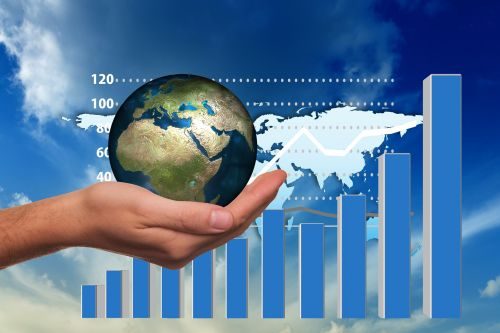
Infrastructure supporting global capital flows
Globalization does not happen alone. This is because we built the pipe. Before capital can be moved across borders in milliseconds, it needs physical and digital infrastructure to support it. In this context, connectivity and communication come into play. They are not just background noise. They are the nervous system of the modern economy.
Without high-speed Internet, fiber optics and a global satellite network, the “accelerated exchange of goods and services” mentioned in the economic definition would not be possible. If the delay disrupts trade, Brazilian farmers will be unable to sell futures contracts to buyers in Tokyo. Delays in the flow of information would prevent London banks from being able to arbitrage currency differences in Asian markets.
Implementation of market surveillance in telecommunication networks
This tip tells you that regulations are created to monitor and analyze economic activity. This is only possible with communication infrastructure. Regulators in the US (SEC), Europe (ESMA) and Asia rely on real-time data sources to detect market manipulation, insider trading and systemic risk.
Here’s how it works:
- Data Aggregation: Data is created for each transaction, each transaction and each product shipment.
- Transmission: This data is transmitted via submarine cables, wireless networks and server farms.
- Analysis: Algorithms and human analysts check this process for anomalies.
Without strong connections, this control breaks down. The market becomes uncertain. Increased risk. The trust is gone.
Cutting costs
If the country’s telecommunications infrastructure is weak, additional costs arise. Foreign investors demand higher returns to compensate for the risk of being left out of the world market. Transaction costs are rising. Information asymmetry is expanding.
For this reason, developing countries often have difficulty fully integrating into world trade, even though they have an abundance of labor and natural resources. The bottleneck is not necessarily in the raw materials. Usually it’s bandwidth.
“The acceleration of exchange is only as strong as the weakest link in the transmission chain.”
Consider this comparison. The latency of Manhattan hedge funds is less than a millisecond compared to the New York Stock Exchange. In areas with unstable power grids and limited fiber coverage, similar trader face delays of seconds or minutes. In high frequency trading, seconds mean forever. In a global supply chain, a few minutes can mean missed windows for perishable goods.
Which connection model dominates global finance?
Two main models drive this integration:
- Fiber optic backbone: Physical cables across oceans and continents. It carries large amounts of data between continents.
- Wireless and Mobile Networks: Essential for last mile connectivity, enabling financial inclusion in remote areas and facilitating mobile banking in emerging markets.
The move to cloud services has also changed the game. Financial institutions no longer have to own all their servers. They rent capacity. This lowers barriers to market entry, but increases dependence on a few large data providers.
Why is this important for financial decisions?
You might think that telecom is just a utility stocks. it is not. They are the rails on which the entire global economy operates. When you invest, you are betting on the flow of information. If the data flow is disrupted by a cyber attack, a ban on data export or a physical cable break, the resources associated with that flow can quickly lose their value.
Diversification is not just a geographical issue. It’s about infrastructure resilience.
The next section examines how the financial products themselves have evolved to manage the risks created by.

Las tecnologías de comunicación, el auge del internet y las infraestructuras de transporte actúan como el sistema nervioso de la globalización moderna. No es solo una metáfora. Estos pilares permiten que el capital, la información y las ideas fluyan a velocidades que hace cincuenta años parecían imposibles.
El objetivo es claro: romper fronteras. Políticos, empresarios y ciudadanos ordinarios comparten una necesidad básica. Quieren intercambiar conocimiento, cultura y tecnología sin las fricciones tradicionales que imponían la geografía. Pero cuando eliminamos las barreras para el capital y los datos, ocurre algo inevitable. También se abren las puertas para las personas.
6. El movimiento migratorio como consecuencia directa
La globalización no solo mueve dinero. Mueve gente. El movimiento migratorio es uno de los efectos más tangibles y complejos de esta integración global. No es un fenómeno nuevo, pero la escala y la velocidad actuales son distintas.
La migración global responde a dos fuerzas principales. Por un lado, la búsqueda de oportunidades económicas. Personas se desplazan hacia regiones con mercados laborales más dinámicos, salarios más altos y mejores perspectivas de crecimiento. Por otro lado, la huida de inestabilidad política o conflictos. En un mundo conectado, la información sobre estas oportunidades o peligros viaja instantáneamente, acelerando la decisión de partir.
Impacto en los mercados de trabajo
Para los países receptores, la migración presenta un cuadro mixto. Los economistas lo discuten constantemente.
- Complementariedad laboral: Los migrantes a menudo llenan vacíos que la población local no cubre. Sectores como la agricultura, la construcción o los cuidados dependen en gran medida de mano de obra externa. Esto mantiene funcionando partes clave de la economía.
- Presión sobre servicios públicos: La llegada repentina de población puede tensionar infraestructuras locales. Escuelas, hospitales y vivienda requieren inversión. Sin planificación, esto genera fricción social.
- Innovación y emprendimiento: Los migrantes tienden a tener tasas de emprendimiento más altas. Crean negocios, generan empleo y aportan nuevas perspectivas que impulsan la innovación.
Para los países de origen, la dinámica es igualmente compleja.
- Remesas: El dinero enviado por migrantes es una fuente vital de ingresos para muchas naciones en desarrollo. En algunos países, las remesas superan la inversión extranjera directa o la ayuda al desarrollo. Este flujo de capital estabiliza economías locales y reduce la pobreza.
- Fuga de cerebros: Cuando los profesionales más capacitados (médicos, ingenieros, científicos) emigran, el país de origen pierde su capital humano más valioso. Esto puede frenar el desarrollo a largo plazo y reducir la capacidad institucional.
La dimensión cultural y social
Más allá de los números, la migración transforma la cultura. La globalización facilita el intercambio cultural, pero la migración lo profundiza. Ciudades como Londres, Nueva York o Dubái se definen por su diversidad. Esta mezcla genera creatividad, pero también puede generar tensiones si no hay una integración efectiva.
La percepción pública sobre la migración a menudo se desvía de los datos económicos.

Globalization is not just about the movement of goods. It moved people. Millions of people have left their homeland in search of better jobs and a better life. This change is not random. This is structural.
Multinational companies are expanding their footprint across borders. They set up factories, offices and distribution centers for new markets. This creates jobs. But it also allowed workers to cross borders. When opportunity flows, so does talent. People change their skills, education and willingness to change.
How business growth drives migration
There is a direct connection between business expansion and immigration. When a company opens a new branch in another country, it needs employees. Local hires are one option. However, the necessary expertise is often not found locally. Alternatively, the company wants to hire experienced employees to manage the business. This creates a demand for skilled labor across borders.
It’s not just about high-level executives. Supply chains need leaders. Technology companies need engineers. Production plants need supervisors. Each role pulls people from one country to another. As a result, the flow of immigrants has been continuous, driven by employment needs.
Who moved and why?
Not everyone moves for work. But for many, this is the most important factor. The decision to leave depends on three factors:
– Skill level. High demand occupations such as IT, healthcare and engineering are mobile.
–training. ** People with specialized qualifications are more likely to be hired abroad.
– character. ** Willingness to adapt to new cultures and systems is key.
Companies are like magnets. They create the jobs. Workers respond. The system feeds itself. Expansion creates more jobs. As jobs increase, so does immigration.
Chain reaction
This movement also changed the homeland. Brain drain is a real concern. As economies get richer, countries lose skilled workers. Remittances can help offset this effect. Families in their home country receive money from relatives working abroad. It contributes to the local economy. But it also creates dependency.
Diversity increases in host countries. Accelerate innovation. But so can tension. Competition for jobs, housing and services can put pressure on communities. Social structures are adjusted. Sometimes it hurts.
What does this lead to?
This pattern does not end. As technology reduces communication costs, telecommuting blurs the line between local and global. However, real migration is still related to labor shortages and business strategy.
We see this in tech hubs like Silicon Valley. Production location in Southeast Asia. in the European healthcare system. The movement of people is woven into the fabric of global business.
“Companies expand globally, and their employees follow.”
This is a cycle. And it’s not over yet.
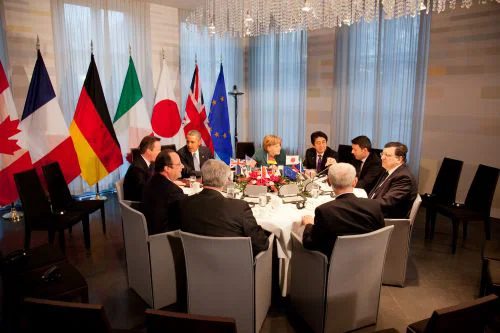
2014 G7 promotes a new global hierarchy
The 2014 G7 summit was more than just a diplomatic photo op. It was a strategic pivot. Leaders draw the lines for how the post-globalized world will work. The goal? A new international order defined by tighter controls and clearer rules.
This has nothing to do with isolation. It’s all about entanglement.
On the economic front, the focus shifted to the development of new markets and the active promotion of free trade. The mechanism is simple. Domestic and international economies are so intertwined that the costs of separation become too high. It’s not just about trading. You become dependent on the same supply chains, capital flows and regulatory frameworks.
Politically, this requires a rule book.
The summit discussed the need for order and regulation. Simply opening the borders is not enough. We need clear business rights and freedoms. Without these guardrails, free trade is just a mess with a price tag attached. The G7 seeks to create limits to protect these financial flows while maintaining political influence.
Culturally speaking, communication is deeper than products.
As economies integrate, values change. Traditions blend. Summit understood that mastering the story is just as important as mastering the ledger. By promoting the exchange of customs and cultural practices, the G7 aims to stabilize the human element of globalization. This is a soft power strategy. While we cannot directly regulate culture, we can encourage it to flourish in an environment consistent with Western liberal democratic values.
Why this is important for your wallet
You might think this is just high politics. It’s not. This structural change affects where the money goes and how much risk you carry.
As national economies become intertwined, local recessions can become global contagions. But once regulations are standardized, cross-border investments become safer, or at least more predictable. The 2014 consensus emphasizes predictability over chaos.
The trade-off is visibility.
In a fragmented world, we know where the risks are. When they become intertwined, a shock in one sector ripple throughout. The G7 seeks to manage this interconnectedness through treaty and cultural harmonization to limit these spillovers. It didn’t eliminate them. But it tried to build a firewall.
For individual investors and business owners, the lessons are clear. Globalization is not a trend that will disappear. This is a structural reality. The 2014 G7 meeting emphasized that the rules are being rewritten to achieve stability through integration. Ignoring that it won’t go away. It just leaves you exposed when the next regulatory change occurs.
The question is not whether the world order will change. It’s whether you put yourself in it or against it. Most of us have no choice but to navigate it.