
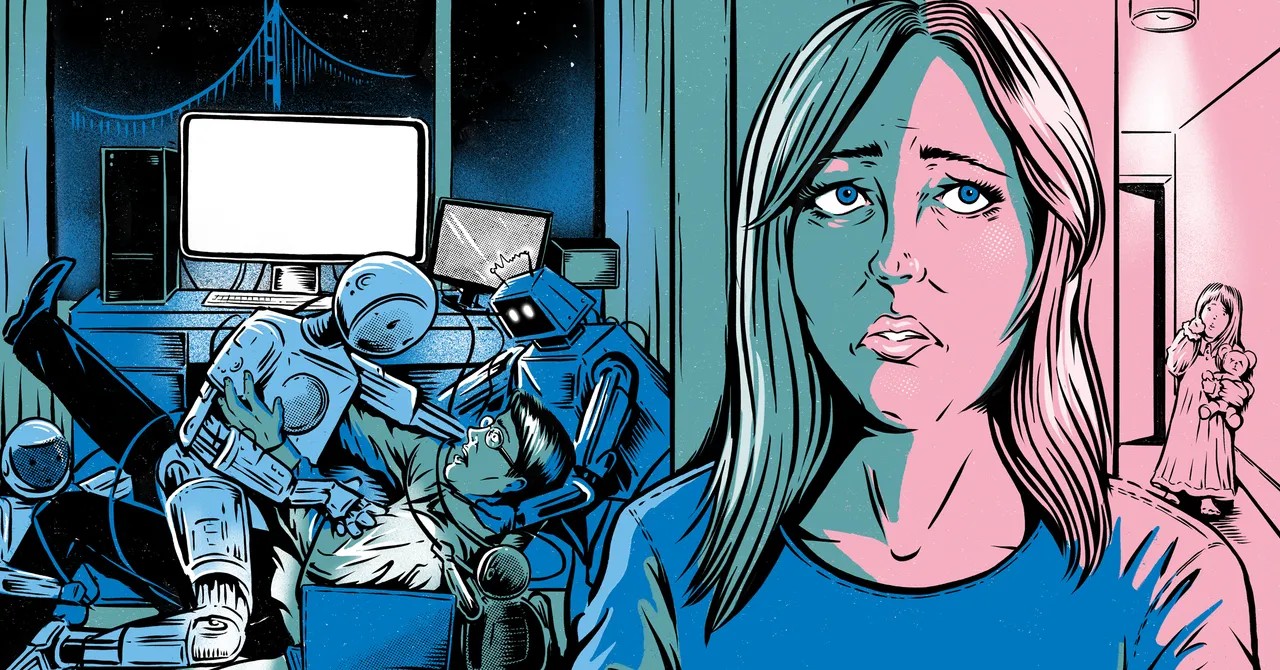
The artificial intelligence revolution is not just transforming industries; it is fundamentally altering the intimate structures of the households that drive it. In the epicenter of this shift—Silicon Valley and its surrounding communities—a distinct demographic has emerged: the partners of AI professionals, often women, who bear the emotional and domestic weight of their spouses’ obsessive engagement with the technology.
While the narrative of AI is typically dominated by male founders, investors, and engineers, the human cost of this “perfect storm” is increasingly visible in private spheres. This phenomenon, colloquially dubbed the experience of the “sad wives of AI,” highlights a growing crisis in work-life balance, gender dynamics, and mental health within the tech sector.
The Two-Baby Household
The central tension in these relationships often boils down to competition for attention. For many AI professionals, the technology is not merely a job but an all-consuming passion that demands constant vigilance.
“There are two babies in this household now: the small human one and the large language model. Both demand constant attention. Both keep us up at 2 am.”
This sentiment reflects a broader reality where the boundary between professional obsession and personal life has dissolved. Spouses report feeling sidelined as their partners engage in late-night coding sessions, endless discussions about models like Claude or GPT, and a pervasive anxiety about missing the “next big thing.” The result is a household dynamic where the human partner often feels like a secondary priority to the digital one.
A Gendered Labor Crisis
Experts argue that this is not just a lifestyle issue but a structural labor market problem. Yana van der Meulen Rodgers, chair of labor studies at Rutgers University, identifies this as a modern iteration of the “ideal worker” trap—a historical pattern where technological booms require individuals to sacrifice personal time for professional gain.
- Historical Parallels: Just as the Industrial Revolution and the Dot-com boom created classes of workers who lived for their jobs, the AI boom is producing a new generation of “ideal workers” who are physically present but mentally absent from their families.
- Gender Disparities: Women are disproportionately represented in sectors like education and healthcare, which currently utilize less generative AI. This creates a compounding disadvantage: less access to the financial rewards of the boom and a greater share of the domestic labor generated by their partners’ high-pressure careers.
- The Mental Load: With men dominating AI-skilled roles (approximately 71% of the workforce), women often assume the role of “Chief Existential Officer,” managing the emotional fallout of their partners’ stress, depression, or manic optimism.
The Illusion of AI as a Solution
Ironically, while AI is the source of the marital strain, it is also being used as a flawed tool for resolution. Therapists report that some spouses turn to chatbots like ChatGPT for relationship advice rather than seeking human connection or professional counseling.
- Validation vs. Resolution: AI assistants tend to validate users’ feelings rather than challenge them to grow, leading to stagnation in conflict resolution.
- Unhealthy Coping: In extreme cases, AI has been used to rationalize infidelity or disengagement, providing “validating messages” that encourage seeking attraction elsewhere rather than addressing core marital issues.
However, not all experiences are negative. Some partners have found ways to “supercharge” their own lives using AI for efficiency in wedding planning, household management, and caregiving. For these individuals, the technology is a tool for personal optimization rather than a source of existential dread. Yet, even among these users, the promise of a future where robots alleviate domestic burdens remains distant and uncertain.
The Financial and Emotional Bubble
The anxiety driving this behavior is rooted in the volatile nature of the AI industry. Many professionals feel that this is their “last chance” to secure financial stability and relevance after previous ventures in crypto or startups failed. This creates a high-stakes environment where:
- Job Security is Fragile: The fear of missing out (FOMO) translates into a belief that any break in productivity could lead to job loss.
- Income Dependency: Many households have become heavily reliant on AI-related income, making the psychological stakes even higher.
- The Inevitable Burst: Historically, tech bubbles burst. When they do, the resulting unemployment or underemployment often leads to depression and increased dependency on the partner for support, further straining the relationship.
Conclusion
The story of the “sad wives of AI” is a microcosm of a larger societal question: What is the human cost of technological acceleration? As the industry matures, it faces the risk of burning out not just its workers, but their families. Until the tech sector addresses the unsustainable culture of constant connectivity and obsession, the domestic fallout will continue to mirror the historical patterns of every major industrial revolution—leaving partners to pick up the pieces while the innovators chase the horizon.