
Oil money buys chips. It builds servers. It attracts the giants.
But it doesn’t lay enough fiber.
Saudi Arabia and the UAE are pivoting hard. The plan? Stop exporting just crude and start exporting compute. They want to be the silicon valleys of the desert. But they’ve built a house on sand that sits under very shallow, very dangerous water.
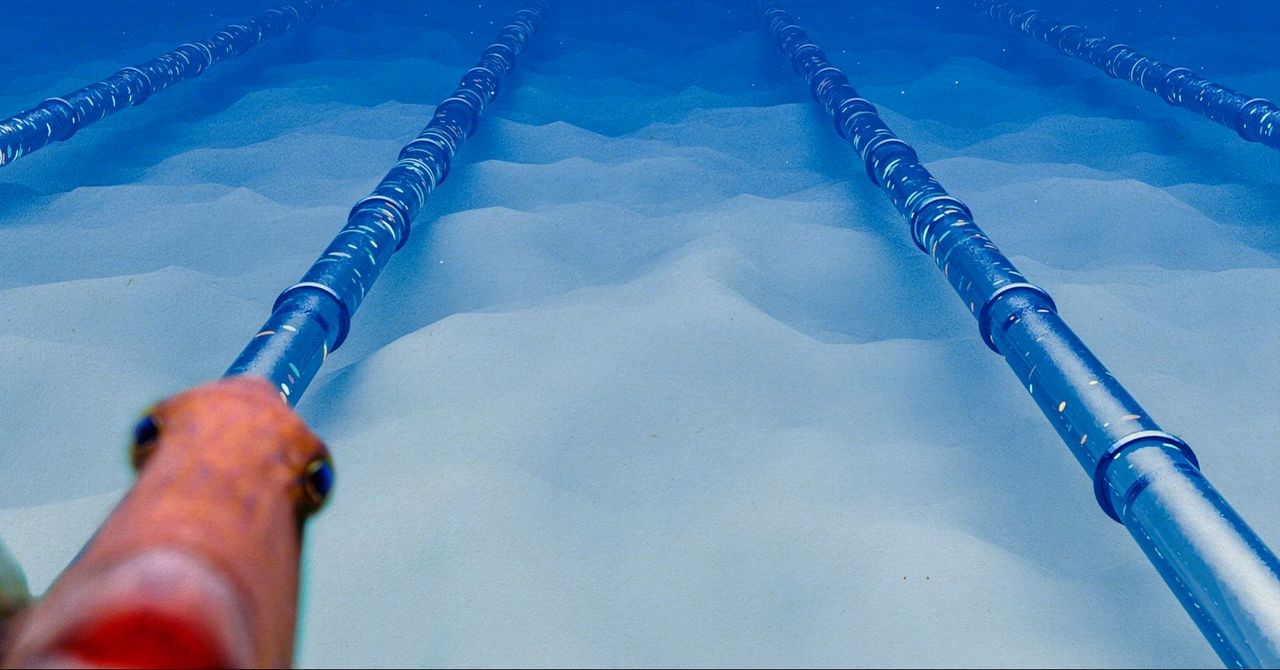
The whole model depends on undersea cables.
95 percent of international data moves through these glass veins.
Most of that Gulf traffic funnels through two bottlenecks: the Red Sea and the Strait of Hormuz. These aren’t just shipping lanes anymore. They’re geopolitical pressure cookers.
Tensions spiked earlier this year. Iran threatened the seven cables running through the strait. Experts called it out then. Nobody really listened. Now the hyperscalers—Amazon, Google, Microsoft—are moving in.
They don’t tolerate lag.
For traditional internet, a slowdown is annoying. For AI infrastructure, it’s a revenue bleed. AI models need constant, massive data streams. Break the pipe and the business stops.
The math is bad. In 2023, two cable cuts in the Red Sea cost an estimated $3.5 billion. That was before the AI boom hit. That was when connectivity standards were still “good enough.”
They aren’t now.
Rethinking the Wire
Hyperscalers want redundancy.
In Europe or the Pacific, major routes have four or five separate physical paths. If one goes down, the data routes around it. Invisible to the user.
In the Gulf? It’s a straight line through a war zone.
“Hyperscalers … now need multiple independent paths … and survivability during geopolitical stress.”
Imad Atwi, Strategy&
Bertrand Clesca of Pioneer Consulting says the demand is changing fast. Gulf countries want route diversity. They want their own version of transatlantic resilience. But the map is hard to redraw.
For years, terrestrial cables across the region died in the cradle. Politics. Borders. War.
Now those same barriers are being priced out by necessity.
New Maps
A three-layer strategy is emerging. It looks like a chessboard played across broken ground.
- Layer 1: Connect landing stations in Saudi, UAE, Oman via land. Stretch that fiber through Jordan into Europe and Asia.
- Layer 2: Bypass Egypt entirely. New subsea-to-terrestrial mixes to dodge Bab el-Mandeb.
- Layer 3: The north route. Iraq. Syria. Turkey.
It’s bold. It’s dangerous. It’s happening.
The Syria route, for example, is theoretically powerful. A land cable can hold 144 fiber pairs. Standard subsea cables hold 24. That’s six times the capacity in one wire.
The problem?
It’s above ground.
A drone. A rocket. A stray bullet. Cut the line and you have to go find it in the middle of nowhere. It’s not abstract.
We watch countries like Iraq and Syria shift from “conflict zones” to “critical digital infrastructure.”
Does anyone else feel weird about that?
The Gulf wants to trade oil for algorithm. The wires are the new pipelines. And pipelines can burst.