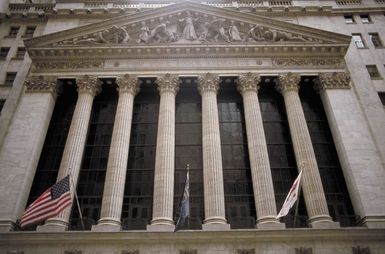
The front facade of the New York Stock Exchange in New York City stands as a monument to capital. But the building is just a shell. The real story starts in 1792. Twenty-four stockbrokers met under a buttonwood tree. They signed an agreement. That moment created the foundation of what would become one of the world’s largest marketplaces for securities.
From Street Corners to Formal Boards
Those early traders were operating on what is now Wall Street. They didn’t have a stock ticker. They didn’t have digital screens. They had verbal agreements and handshake deals. By 1817, the group formalized their operations. They became the New York Stock and Exchange Board. It was a small step. A necessary one.
Then came the name change. In 1863, the entity adopted the New York Stock Exchange name. The current name stuck. It signaled maturity. It signaled scale.
The Membership Model
For most of its history, the NYSE operated on a closed system. Ownership wasn’t held by public shareholders in the modern sense. It was controlled by members. There was a hard cap. Since 1953, the number of members was limited to 1,366. You couldn’t just apply. You had to buy in.
The barrier to entry was a seat. Starting in 1868, the only way to join the exchange was to purchase a seat from an existing member. This created a scarcity model. It kept competition tight. It turned trading rights into a tradable asset themselves.
The War of 1812 left a quiet period that quickly filled with noise. Commerce surged. Railroads became the new gold rush in the 1830s. Speculators threw money at tracks and ties. The exchange needed capital to fuel this. It got it.
Then came the Civil War. The conflict from 1861 to 1865 changed everything. It wasn’t just about Union or Confederacy. It was about industrial scale. The New York Stock Exchange became the engine for accelerating American industrialization. Factories needed money. The exchange provided it.
But the machine had a flaw. Investors kept losing everything. The Panic of 1837 was a disaster. Many lost heavy losses. The public lost trust. The exchange realized it couldn’t just take fees on blind hope.
It started demanding disclosure. Companies had to show their finances. They had to tell the truth about their books. This became a condition for listing. You wanted on the floor? Prove you weren’t running a scam.
This was early regulation. Informal. Essential.
Then came 1929. The crash wasn’t just a dip. It was a collapse. The stock market crash of 1929 signaled the start of the Great Depression. It was the end of the free-for-all era.
The federal government stepped in. They didn’t just watch. They investigated. They built rules. The Securities and Exchange Commission (SEC) was born from this wreckage. It wasn’t about stopping the market. It was about defining the boundaries.
We are still living in the shadow of that response. The SEC doesn’t just regulate today. It enforces the legacy of 1929. Every prospectus. Every quarterly report. It traces back to that panic.
Why do we have disclosure laws? Because 1837 showed us that opacity kills trust. Why do we have the SEC? Because 1929 proved that self-regulation fails when greed outpaces caution.
The floor is quieter now. But the rules are louder. They were written in panic. They keep the lights on.
Becoming a listed company on the New York Stock Exchange is no small feat. You have to clear specific hurdles just to get on the board. Staying there requires maintaining strict criteria. One major rule introduced in 2003 demands that corporate governance boards have a majority of independent directors. These are non-employees who bring outside perspective. The same independence rule applies to the audit, compensation, and nomination committees. They must be entirely composed of outsiders.
Trading mechanics changed too. In 2001, the exchange shifted from fractional pricing to decimal pricing. It was a significant shift in how stocks were valued and traded.
Ownership of the exchange itself has undergone massive restructuring. Before 2006, seats were sold to individuals. That era ended in December of that year. The last seats went for up to $4 million. Everyone who held a seat became a shareholder in the newly formed NYSE Group, Inc. It was a public company now.
The structure kept expanding. In 2007, a merger with Euronext N.V. created NYSE Euronext. Euronext was a group of European securities exchanges. The expansion didn’t stop there. Four years later, in 2011, NYSE Euronext acquired the American Stock Exchange. It was later renamed NYSE Amex Equities.
Then came another shift. Intercontinental Exchange, an electronic trader of energy commodities, acquired NYSE Euronext in 2013. They sold off the European assets but kept the NYSE. The momentum continued. In 2017, the NYSE bought the National Stock Exchange, based in New Jersey. The list of owners and rules evolves constantly.
How Listing Standards and Corporate Governance Work
Why do these rules matter? They signal stability. Investors look for that majority of independent directors. It reduces conflict of interest. The requirement for independent audit and compensation committees adds another layer of oversight. It’s not just about listing. It’s about maintaining that status.
The move to decimal pricing in 2001 changed the granularity of trades. It affected spreads and market efficiency. You can trace the modern structure back to these mechanical and regulatory shifts.
The Evolution of NYSE Ownership and Mergers
The timeline of ownership reveals a trend toward consolidation. From the sale of seats in 2005 to the formation of NYSE Group, Inc., the exchange went from a membership club to a public entity. The 2007 merger with Euronext N.V. added international reach. The 2011 acquisition of the American Stock Exchange expanded equity offerings.
Intercontinental Exchange’s 2013 purchase of NYSE Euronext marked the end of the European era for the NYSE. They retained the core New York asset. The 2017 acquisition of the National Stock Exchange in New Jersey showed a continued drive to consolidate domestic infrastructure.
Why NYSE Listing Criteria Matter for Companies
Meeting the requirements is the first step. Maintaining them is the ongoing challenge. The independence rules for boards and committees are central to that challenge. They ensure checks and balances. The decimal pricing shift in 2001 changed the trading floor dynamics. It’s a technical change with real consequences for liquidity and price discovery.
The history of