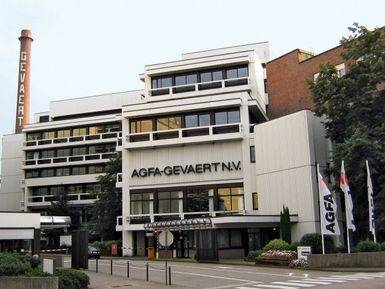
The merger that created Agfa-Gevaert NV in 1964 was less about starting fresh and more about consolidating a century of chemical and photographic history. It brought together Agfa AG from Leverkusen, West Germany, and Gevaert Photo-Producten NV from Mortsel, Belgium. The result was a dual-structured entity. One leg operated in Germany, the other in Belgium. By 1971, the Belgian side rebranded as Agfa-Gevaert NV, the name that stuck.
This wasn’t just a corporate shuffle. It was a pivot point for a company that had spent decades dominating the analog world. For years, the brand meant one thing: photography. Development tanks, rolls of film, darkroom chemicals. But the landscape shifted. In 2004, Agfa sold its consumer film and photofinishing business. They walked away from the very product that built their reputation.
So where did the money go? Into medical imaging technology. That is now the core of their existence. Alongside healthcare, they hold onto niche industrial markets: microfilm, motion-picture film, document management, and commercial prepress services. If you need graphics prepped for a billboard or a magazine label, Agfa’s infrastructure likely handled it.
The chemical roots and wartime ties
To understand the modern company, you have to look at the name itself. Agfa is an abbreviation for Aktiengesellschaft für Anilinfabrikation. It translates roughly to “Corporation for Aniline Manufacture.” Founded in 1867 near Rummelsburger See, outside Berlin, it started as a dye house. Synthetic dyes were the new frontier. Agfa jumped on it.
They didn’t stop at fabric color. In 1908, they applied their chemical expertise to photography. This was a strategic move. As the 20th century dawned, the demand for capturing images was exploding.
But the company’s path was tangled with Germany’s darkest industrial era. From 1925 to 1945, Agfa was part of IG Farben. This massive chemical cartel dominated the European industry until the end of the war. When IG Farben was dismantled, Agfa emerged as a separate entity. By 1951, it became a partly owned subsidiary of Bayer AG, another successor to the IG Farben conglomerate.
The Belgian counterpart
The other half of the 1964 merger had its own distinct timeline. Gevaert began in 1890 in Antwerp. Lieven Gevaert, born in 1868, started manufacturing photographic paper. It was a specialized craft. He built a company that eventually became Gevaert Photo-Producten NV in 1920.
Unlike its German partner, which had deep roots in industrial chemicals and wartime production, Gevaert’s origin story was more focused on the direct output of photography: paper. The merger combined German chemical scale with Belgian photographic precision.
Global footprint and ownership shifts
Today, the group’s operations are scattered. Two principal factories anchor the European base: one in Leverkusen, near Cologne, and the other in Mortsel, near Antwerp. These facilities