There is a certain type of player in the financial world, often called a “small investor” (Küçük Yatırımcı or KY). These people work on tight budgets to navigate a system designed for large capital flows. Professional consultants are rarely hired. They don’t realize that the market predators are waiting for them to make a mistake.
The word “small investor abuse” is used as social media slang. This means that these participants get crushed between the feet of larger players without knowing why. This dynamic is shifting from traditional stocks to digital assets. It became absurd with NFTs (Non-Fungible Tokens). The conversation is moving away from basic questions like “When should I buy Bitcoin?” Ridiculous prompts like “Create an NFT now. Tell me which asset will create value for me?”
Jack Dorsey sold his first tweet for millions of dollars. Everyone thinks they can buy the next million dollar tweet. experts allegedly sold advice The game just keeps getting worse.
I realized I might hold similar influence. If I tweet, people might put all their savings into a certain stock or Bitcoin. This is dangerous. We need to see how the market actually works.
The Mechanics of Public Offerings
Companies go public for one reason: to raise capital cheaply. This process is called IPO (Initial Public Offering). The goal is growth. More funding means more expansion.
This process comes with heavy burdens. Transparency becomes mandatory. Reporting standards are strict. Management loses some autonomy. They tolerate these limitations in order to increase the value of the company.
When stock prices fall, founders get hurt the most. If a retail investor with 100,000 lira loses 1% (1,000 lira), the business owner can lose about a million dollars. Blaming the owners for holding shares is illogical. The CEO and the Board of Directors are responsible for performance. If the share price falls, the CEO changes.
Small investors have free will. If the stock is poorly productive, the wisest thing to do is to sell it. Complaining about the rules of the game does nothing. You must act on your own capital.
Why financial reporting cannot predict every move
Logically, when the CEO becomes a legend and the balance sheet reaches its peak, the stock price should rise.
They don’t. Always.
If financial reports perfectly predicted stock prices, insiders sold everything to their relatives before the bad news. The stock market would cease to exist. That is why it is important to analyze reliable sources. You need to understand the larger context of the company and the stock market.
Think about the year 2020. The International Monetary Fund (IMF) has announced that the coronavirus pandemic has caused the global economy to shrink. The economy froze in the second quarter. We expected companies to fail. We expected the stock market to crash.
That didn’t happen.
The BIST 100 index in Turkey closed 2019 at 114,000. The number fell to 84,000 on March 23rd, but rose to 118,000 by July 9th. The US S&P 500 index peaked in February 2020 and bottomed in March. Get well soon too.
The real economy will not recover at this rate. Companies are no longer able to operate normally. They don’t work miracles.
“If someone tells you that you can predict the market with one variable, they are wrong. You are being fooled.”
There are too many variables in the domestic and international currency markets. Uncertainty makes each variable deterministic at different times. This is chaos theory. You have to understand that. Reliance on simple linear analysis is a trap.
Delusions of “expert” analysts
The biggest problem with the Turkish stock market is its shallowness. You need Turkish lira to add value. Companies need to make a profit. We need financial stability. Only in this way can the market be predicted.
Currently only “Hot Money” is included. short term speculation. Lack of long-term investment. When better opportunities open up, capital flows out immediately.
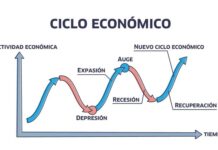
Even if Turkey achieves a predictable business cycle, no one gets rich just by being in a predictable market.
I compare stock advisors on Twitter to horse racing commentators. People who know which horse will win through technical analysis don’t write their predictions in a newspaper every day. He enjoyed sitting in the VIP box at the racetrack.
If he was a bad analyst, he would be fired from the newspaper for not making predictions. The same applies to the stock market.
Asking a stranger on social media which stocks are profitable is no different than asking for horse racing tips. If this person really knows why would they answer you? Why use Twitter? If such predictions were possible, everyone would be rich.
The tweet you lost is completely stupid. Why proclaim your stupidity to the whole world?
Skip the myths and focus on the mechanics
Don’t listen to urban legends about the stock market. The reality is less glamorous and more mechanical. If you have limited funds, index funds are the best choice. They offer diversification without having to set aside large sums of money or spend hours looking at charts every day. However, the strategy shifts. They don’t just look at long-term analytics. they diversify across categories. Some even move capital into foreign exchanges. The old saying “don’t put all your eggs in one basket” is true.
Noise and signal
Let’s see how information spreads on social media. Expert? They are too busy working to tweet about their portfolio. The amateurs? They are busy broadcasting their own incompetence. This is a filter you have to learn to apply yourself.
Consider, for example, a stock split. Many individual investors get excited when a company splits its shares. They believe that the price jump signals growth. This is not true. The split changes the number of shares and the price per share, but the market capitalization remains identical. This is a superficial change, not a fundamental change.
Performance Doesn’t Always Translate
There is a lag. In the real world, even if a company’s business is strong, the stock price stagnates. Why? Because market prices are based on expectations, not just current reality. On the other hand, macroeconomic forces can disrupt even the best-run companies. When interest rates rise, the borrowing costs increase. As competition increases, margins shrink. These changes created different performance profiles between different departments. You cannot treat every stock like it operates in a vacuum.
The Wisdom of Admitting Ignorance
Here’s the hard truth about financial decisions. Surround yourself with people who are willing to say, “I don’t know.” That admission signals respect for complexity. Avoid people who claim to know everything. If someone says they have the perfect formula, walk away. The market is too chaotic, too human and too random for anyone to have all the answers.
Bilgi güçtür, ama sabır daha çoktur. (Knowledge is power, but patience is even more important.)